

Webinar on Cold-Formed Steel Attachment to Concrete in Seismic Zones
$100.00
Continuing Education Credits Available – 1.5 PDH Credits
For decades, Power- Actuated Fasteners (PAFs) have been used in the construction industry as a safe, reliable, and productive method to fasten various building components-such as cold-formed steel (CFS) framing-to steel and concrete. Code provisions for the use of PAFs in seismic areas for attachments of cold-formed metal framing to concrete have been subject to various interpretations. This presentation will provide recommendations based on Hilti’s understanding of the code provisions.
AISI S100-16, North American Specification for the Design of Cold-Formed Steel Structural Members, 2016 Edition (including the latest supplements), provides some basic provisions regarding calculation of the shear and tension resistance of a connection between CFS and concrete, but does not provide specific equations or values. In addition, Chapter 13 of ASCE/SEI 7-16, Minimum Design Loads and Associated Criteria for Buildings and Other Structures, includes some restrictions regarding the use of PAFs in Seismic Design Categories (SDC) D, E, and F. Chapter 13 is entitled “Seismic Design Requirements for Nonstructural Components,” so the focus is on nonstructural applications like partition walls.
This presentation is designed to clarify the intent of the language in the code-referenced publications AISI S100 and ASCE/SEI 7-16 as it relates to PAFs used to attach track to concrete, in SDC A-C and SDC E-F. The presentation will also provide practical guidance to the designer regarding which design values should be used and where those values can be obtained. Additional practical recommendations will be provided regarding the specification of various types of PAFs and their embedment depths into the concrete.
Christopher Gill, Hilti Inc.

Chris Gill is the Technical Services Manager for Direct Fastening at Hilti in Plano, Texas. He is responsible for the department which performs product testing, generates technical data, publishes technical documents, and obtains approvals and listings for power-actuated and screw-fastening products. He is a member of the American Iron and Steel Institute (AISI) Committee on Specifications, and a voting member of its subcommittees responsible for connections and joints, and diaphragm design. Chris recently participated in the 2020 NEHRP Provisions Update Committee, Issue Team 9, which addressed alternate provisions for seismic diaphragm design, and recommended new provisions for incorporation into ASCE/SEI 7. He has also contributed to the soon-to-be published ASCE/ SEI Design Guide “Cold-Formed Steel Connections to Other Materials.”
Chris has a total of 33 years working in the fastening and anchoring industry. He previously worked as a field engineer, field engineering manager, trade manager and product manager with Hilti. He holds a B.S. degree in Engineering from Brown University and an M.S. degree in Engineering and Technology Management from Oklahoma State University.
In order to receive credit for this course, you must complete the quiz at the end and pass with at least 80% for a certificate to be generated automatically
Related Products

Webinar on Vibration Serviceability of Floors with Cold-Formed Steel Framing
Continuing Education Credits Available – 1.5 PDH Credits
Cold-formed steel (CFS) joists and trusses have high strength-to-weight ratios and good overall economy, so they are popular choices for floor framing members. As is the case with most types of floor systems, CFS floors are potentially susceptible to vibrations due to walking and other human activities. This webinar will raise awareness of the importance of vibration serviceability by describing two forensics projects with lively CFS floors. The literature contains several floor vibration evaluation methods that might be applicable to CFS floor. However, unlike other materials, there is not a widely accepted and practical vibration evaluation method for CFS floors. Potential evaluation methods will be discussed.
Presenter: Brad Davis, Ph.D., S.E., P.E.
University of Kentucky
 Brad Davis is an associate professor of civil engineering at the University of Kentucky where he is responsible for all steel design coursework and has received awards recognizing excellence in teaching. As the owner of Davis Structural Engineering, LLC, he provides consulting services for structural vibration, forensics and advanced steel design applications. He is a member of the AISC Committee on Manuals, and is a co-author of AISC Design Guide 11, Vibrations of Steel-Framed Structural Systems Due to Human Activity. Brad has published approximately two dozen journal and conference papers on vibration. He earned his Ph.D. from Virginia Tech and has eight years of experience in building design. He has S.E. and P.E. licenses in 14 states.
In order to receive credit for this course, you must complete the quiz at the end and pass with at least 80% for a certificate to be generated automatically
Webinar on Introducing AISI S250: Your Starting Place for Determining Thermal Transmittance through Cold-Formed Steel Framing
Continuing Education Credits Available – 1.5 PDH Credits
The webinar introducing AISI S250, North American Standard for Thermal Transmittance of Building Envelopes with Cold-Formed Steel Framing, will walk attendees through the history, development and contents of the AISI S250 standard. Participants will obtain a relative understanding of how to apply the various provisions in order to evaluate the thermal capabilities of envelope assemblies (e.g., walls, ceilings/roofs) containing cold-formed steel framing for use in professional practice. Jonathan Humble led the work group responsible for the development and publication of the AISI S250 standard.
Presenter: Jonathan Humble, FAIA, NCARB, LEED BD+C
American Iron and Steel Institute
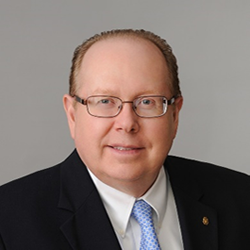 Jonathan Humble is a Regional Director of Construction Codes and Standards for the American Iron and Steel Institute (AISI). He holds Bachelor’s and Master’s degrees in Architecture from the University of Wisconsin-Milwaukee, is licensed as an architect in Connecticut and Massachusetts, is NCARB-certified, and holds a LEED AP-BD+C credential. He has received architectural awards for his designs while in the practice of architecture.
Jonathan was inducted into the American Institute of Architects (AIA) College of Fellows for his outstanding contributions to the AIA and its membership. He is a recipient of the International Code Council’s Honorary Membership, ASHRAE International’s Distinguished Service Award, National Fire Protection Association’s Committee Service Award, and the Cool Roof Ratings Council’s Marty Hastings Award, all in recognition of his exceptional service and contributions to these codes and standards organizations.
Jonathan’s activities within AISI include research and development of new technologies for AISI standards and guides, participation in national model codes and standards development, and educational services to steel industry members, design professionals, code officials, general contractors and building owners.
In order to receive credit for this course, you must complete the quiz at the end and pass with at least 80% for a certificate to be generated automatically
Webinar on the Built-Up Member Design Considerations
Continuing Education Credits Available – 1.5 PDH Credits
What can be done when a structural member requires a high-load capacity? The common solution is to design a built-up profile consisting of two or more cold-formed steel (CFS) framing sections. Built-up profiles use common CFS framing members, such as shear wall boundary studs, floor joists, stud packs and headers. This webinar will review the applicable AISI S100, North American Specification for the Design of Cold-Formed Steel Structural Members and AISI S240, North American Standard for Cold-Formed Steel Structural Framing design provisions for two types of built-up profiles — built-up compression members and built-up flexural members. The webinar will review the member limit states of global buckling, local buckling and distortional buckling. It will also provide guidance for achieving adequate interconnection of the individual profiles.
 Presenter: Roger LaBoube, Ph.D., P.E., Cold-Formed Steel Engineers Institute
Dr. Roger A. LaBoube is Curator’s Distinguished Teaching Professor Emeritus of Civil, Architectural and Environmental Engineering and former director of the Wei-Wen Yu Center for Cold-Formed Steel Structures at the Missouri University of Science & Technology. Dr. LaBoube holds B.S., M.S., and Ph.D. degrees in Civil Engineering from the University of Missouri-Rolla. He has an extensive background in the design and behavior of cold-formed steel structures. His research and design activities have touched on many facets of cold-formed steel construction, including cold-formed steel beams, panels, trusses, headers, and wall studs as well as bolt, weld, and screw connections. Dr. LaBoube is active in several professional organizations and societies. He serves as chairman of the American Iron and Steel Institute Committee on Framing Standards and is an emeritus member of the AISI Committee on Specifications for the Design of Cold-Formed Steel Structural Members. He is a registered professional engineer in Missouri.
In order to receive credit for this course, you must complete the quiz at the end and pass with at least 80% for a certificate to be generated automatically
Price: $100
Webinar on Roles and Responsibilities for Success with Cold-Formed Steel Framing
The webinar will be presented as a panel interactive session, with Jeffrey Klaiman, P.E., principal in charge of structural engineering at ADTEK Engineers, Inc. as the lead presenter. Panelists will include Don Allen, P.E., director of engineering at Super Stud Building Products, Inc.; Kenneth Pagano, P.E., cold-formed steel truss design engineer at Scosta Corporation; and Patrick W. Ford, P.E., senior project manager at raSmith. The webinar will: Introduce AISI S202, Code of Standard Practice for Cold-Formed Steel Structural Framing and describe how this standard was developed and is maintained. Describe the roles of various individuals and entities in a cold-formed steel framing project. Identify new items and changes in the 2020 edition of the Code of Standard Practice. Provide examples of items in the Code of Standard Practice and how they can be used in actual projects. Include a panel discussion with the authors and users of the standard.
Presenters
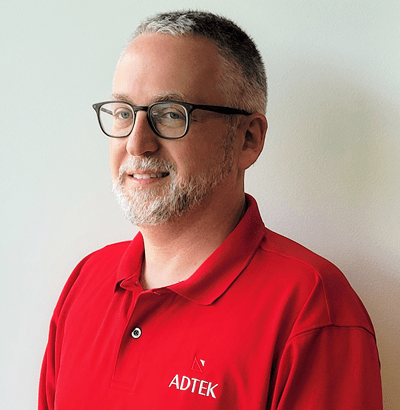
Jeffrey Klaiman, P.E.
ADTEK Engineers, Inc.
Jeff has almost 30 years of experience in the construction industry. His responsibilities include building maintenance and engineering; on-site engineering for a concrete contractor; Manager of Technical Services and Versa-Truss Product Manager for Dale/Incor (national manufacturer of cold-formed steel framing products and systems), participation on the American Iron and Steel Institute’s Committee on Specifications for the Design of CFS Structural Members and Committee on Framing Standards; a member of CFSEI for more than 15 years; ASTM International and the SFA. Mr. Klaiman serves as chairman of the Standard Practices Subcommittee of the AISI Committee on Framing Standards, chairman of the SFIA Technical Committee, and is also the president of MASFA. He is a past president of CFSEI. In his position at ADTEK Engineers, Inc. as Principal in Charge of Structural Engineering, Mr. Klaiman oversees the design and coordination of all cold-formed steel design documents. He also manages in-house staff in four offices for general structural and CFS framing design, develops project schedules, and coordinates quality control reviews with project managers on his team. Mr. Klaiman holds a bachelor’s degree in Civil Engineering from the University of Michigan, and an MBA from Eastern Michigan University.
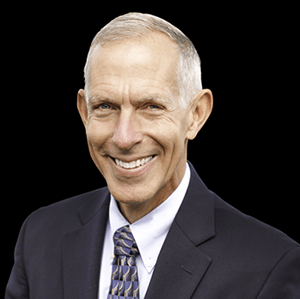
Don Allen, P.E., S.E., LEED AP
Super Stud Building Products
Don Allen, P.E., S.E., LEED AP, is an internationally known expert in cold-formed steel design, and currently serves as director of engineering for Super Stud Building Products. He chairs the AISI Education Committee, is actively involved in the development of ASTM and AISI standards, and has designed projects in Europe, Africa and North America. In addition to working for steel product manufacturers, Don has spent more than a decade in private practice and served over nine years as technical director for the Steel Stud Manufacturers Association (SSMA), the Steel Framing Alliance (SFA) and the Cold-Formed Steel Engineers Institute (CFSEI). At Super Stud, Don is actively involved in product development for multiple product lines including steel framing, MgO structural floor sheathing, steel structural wall panels, exterior insulation and finish systems (EIFS), and steel doors.

Kenneth (Kenny) J. Pagano, P.E.
Scosta Corporation
Kenneth (Kenny) J. Pagano, P.E. is the cold-formed steel truss design engineer for Scosta Corporation headquartered in Sebring, FL. Kenny also serves on the AISI Committee on Framing Standard’s main Committee as well as the Framing and Standard Practices Sub-Committees. Kenny maintains an office outside of Palatka, FL where he is an Adjunct Professor for the Engineering Technology department at the local college – St Johns River State College.

Patrick M. Hainault, P.E.
raSmith
Patrick M. Hainault, P.E. is the cold-formed group leader at raSmith in Brookfield, Wisconsin. His experience includes engineering design and staff management with raSmith and Matsen Ford Design Associates, Inc., where he was a principal and senior engineer for 21 years. His expertise includes application of the latest technologies and design concepts to a wide variety of primary and secondary structures, including prefabricated systems. In addition to specialty expertise in cold-formed steel, his engineering systems design experience includes structural steel, reinforced concrete, engineered masonry and wood. He was a structural designer for a concrete reinforcement supplier and a technician for a national material-testing firm. Patrick is a member of the SFIA Technical Committee and the AWCI Construction Technology Committee. He is a registered Professional Engineer in Wisconsin and several other states. He earned his Bachelor of Science degree in Civil Engineering from Marquette University.
In order to receive credit for this course, you must complete the quiz at the end and pass with at least 80% for a certificate to be generated automatically
Webinar on Mid-Rise Construction using Light Weight Steel Framing
Continuing Education Credits Available – 1.5 PDH Credits
The webinar will cover light gauge steel wall framing and C-joists, composite deck and concrete, precast concrete, steel beams and deck and light gauge steel trusses. It will review wall and floor, fire and sound assemblies, panelization of walls, structural floor systems, lateral stability, roof design, shear wall deflection compared to wood, progressive collapse, and overall approval process. The webinar will also review completed projects.
Presenter: Raymond van Groll, M.Sc.(Eng), P.Eng.,
Atkins + Van Groll Inc.

Raymond van Groll, M.Sc.(Eng), P.Eng., Managing Partner of Atkins + Van Groll Inc. With over 25 years of experience, van Groll specializes in mid-rise structural buildings and light gauge steel construction. In 1990, he founded Van Groll Engineering Inc., a structural professional engineering company specializing in residential and commercial construction and light gauge steel design. In 1997, he co-founded Atkins + Van Groll Inc. Consulting Engineers with Jonathan Atkins.
Raymond van Groll assisted in the development of the Canadian Sheet Steel Building Institute (CSSBI) “Lightweight Steel Framing Design Manual.” Some of his most notable projects include Chelster Hall Estate in Oakville, the Louis Vuitton Flagship Store in Toronto, The Rosseau, J.W. Marriott Resort & Spa, and Corktown Condominiums in Toronto.
In order to receive credit for this course, you must complete the quiz at the end and pass with at least 80% for a certificate to be generated automatically
Webinar on Innovative Options with Cold-Formed Steel Floor Systems
Continuing Education Credits Available – 1.5 PDH Credits
Cold-formed steel (CFS) framed floor systems used to be simple and straightforward: joists at 16” or 24” on center aligned over wall studs with the joists braced with blocking/strapping every few feet, all topped with plywood or pan deck and concrete. But now the rules have changed. With the advent of ledger framing and load distribution members and composite CFS floor systems, we are seeing true innovation in floor framing, as well as how floors are built/supported/topped. With new products being developed at a rapid pace, engineers have to keep up with the latest to select economical and lightweight systems that can now compete with the efficiencies of open-web bar joist and composite deck systems. This session will provide an overview of several CFS floor framing systems and methodologies that are starting to win back floor framing from other materials, and other potential efficiencies that can be gained from the inherent versatility and constructability of CFS floor framing.
After attending this presentation, participants will be able to:
- Design and detail joist and truss support systems that obviate alignment framing and provide more flexibility for field fixes and bearing wall openings.
- Evaluate a wide variety floor topping materials that provide joist bracing, diaphragm strength, and gravity load support.
- Consider options with wider spaced joists or trusses: using the span capabilities of steel deck or steel-and-concrete systems.
- Consider composite design with CFS and concrete systems: both deck and joists and combinations of these.
- Know where to go for additional resources on floor issues.
Presenter: Don Allen, P.E., Super Stud Building Products, Inc.
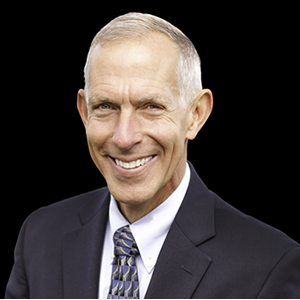 Don Allen, P.E. currently serves as Director of Engineering for Super Stud Building Products, Inc., where he oversees product development, testing, engineering, and technical services. Having worked in the cold-formed steel industry since 1990, Don served as a CFS specialty engineer, Engineer-of-Record, and industry representative before his current position with a stud manufacturer. He concurrently served for more than nine years as Technical Director for three associations in the cold-formed steel industry ─ the Steel Stud Manufacturers Association (SSMA), the Steel Framing Alliance (SFA), and the Cold-Formed Steel Engineers Institute (CFSEI). He chairs the Education Subcommittee of the American Iron and Steel Institute’s Committee on Framing Standards and Committee on Specifications, and was the recipient of the 2013 CFSEI Distinguished Service Award. He has given presentations on CFS in China, Colombia, Egypt, Hawaii, and South Africa, and has been involved in design projects in North America, Africa, and Europe.
In order to receive credit for this course, you must complete the quiz at the end and pass with at least 80% for a certificate to be generated automatically
Webinar on Cold-Formed Steel Classroom: Impact of the 2018 IBC
Continuing Education Credits Available – 1.5 PDH Credits
The American Iron and Steel Institute’s Committee on Framing Standards has developed 2015 editions of the suite of cold-formed steel framing design standards (S220-15, S240-15, S400-15) and the Committee on Specifications has developed S310-15 for diaphragm design, as well as a 2016 edition of the North American Specification (S100-16). This presentation will discuss the scope and some of the changes to these design standards. Specific reference will be provided to clarify adoption of the standards in the 2018 International Building Code.
The presentation will highlight available design aids provided by AISI such as AISI D110-16, Cold-Formed Steel Framing Design Guide, which has been updated to reflect the design requirements of AISI S100-2012 and AISI S240-2015. Another excellent source for design examples is the Cold-Formed Steel Engineers Institute Tech Notes which will also be addressed by the presentation. Also, an overview of the soon to be published AISI D113 Cold-Formed Shear Wall Design Guide will be provided.
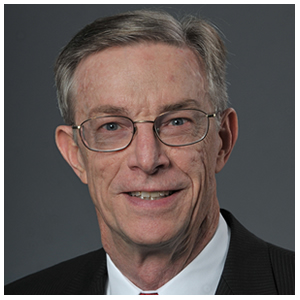 Presenter: Roger LaBoube, Ph.D., P.E.
Wei-Wen Yu Center for Cold-Formed Steel Structures
Roger LaBoube, Ph.D., P.E. is Curator’s Distinguished Teaching Professor Emeritus of Civil, Architectural and Environmental Engineering and Director of the Wei-Wen Yu Center for Cold-Formed Steel Structures at the Missouri University of Science & Technology (formerly University of Missouri-Rolla). Dr. LaBoube holds B.S., M.S., and Ph.D. degrees in Civil Engineering from the University of Missouri-Rolla. Dr. LaBoube has an extensive background in the design and behavior of cold-formed steel structures. His research and design activities have touched on many facets of cold-formed steel construction including cold-formed steel beams, panels, trusses, headers, and wall studs as well as bolt, weld, and screw connections. He is active in several professional organizations and societies, including membership on the American Iron and Steel Institute’s Committee on Specifications for the Design of Cold-Formed Steel Structural Members and chairman of the AISI Committee on Framing Standards. He is a registered Professional Engineer in Missouri.
In order to receive credit for this course, you must complete the quiz at the end and pass with at least 80% for a certificate to be generated automatically
Back-to-Basics: Structural vs Nonstructural Members Webinar
Continuing Education Credits Available – 1.5 PDH Credits
The North American Standard for Cold-Formed Steel Framing – Nonstructural Members, AISI S220, has been adopted into IBC 2015. AISI S220 was created to help delineate and eliminate the confusion between the engineering principles and requirements for cold-formed steel structural members and nonstructural members. The webinar will address the basic behavior of composite vs non-composite wall assemblies, as well as design requirements that differ between the structural and nonstructural member.
Presenter: Roger LaBoube, Ph.D., P.E.
Wei-Wen Yu Center for Cold-Formed Steel Structures
Roger LaBoube, Ph.D., P.E. is Curator’s Distinguished Teaching Professor Emeritus of Civil, Architectural and Environmental Engineering and Director of the Wei-Wen Yu Center for Cold-Formed Steel Structures at the Missouri University of Science & Technology (formerly University of Missouri-Rolla). Dr. LaBoube holds B.S., M.S., and Ph.D. degrees in Civil Engineering from the University of Missouri-Rolla. Dr. LaBoube has an extensive background in the design and behavior of cold-formed steel structures. His research and design activities have touched on many facets of cold-formed steel construction including cold-formed steel beams, panels, trusses, headers, and wall studs as well as bolt, weld, and screw connections. He is active in several professional organizations and societies, including membership on the American Iron and Steel Institute’s Committee on Specifications for the Design of Cold-Formed Steel Structural Members and chairman of the AISI Committee on Framing Standards. He is a registered Professional Engineer in Missouri.
In order to receive credit for this course, you must complete the quiz at the end and pass with at least 80% for a certificate to be generated automatically