

Webinar on Overview of Basic Steel Manufacturing and Production of High Strength Low Alloy (HSLA) Steels

Continuing Education Credits Available – 1.5 PDH Credits

Primary steel manufacturing is nearly as old as human civilization dating back to the preindustrial days of crucible steel production. However, the industrial revolution accelerated the mass production of steel through the Bessemer process in mid-1800’s. Since then, innovations have continued to fuel the rapid expansion of global steel making capabilities and capacities. But the fundamental principle of steel making has remained unchanged through these times.

This webinar will cover the basic aspects of modern-day steel production and its evolution over time. It will highlight the metallurgical principles driving these processes including a discussion of potential future steel production methods. The presentation will introduce the concept of different steel types with a focus on the development of High Strength Low Alloy (HSLA) steels. The discussion will include the drivers behind the development, typical applications, and future direction of HSLA steels.

Presenter

Norm Bettedpur
Worthington Steel

Norm Bettedpur

Norm Bettedpur is part of the Technical Services team at Worthington Steel. He obtained his M.S. degree in Metallurgy from Michigan State University. Norm started his career at the Indiana Harbor Works in East Chicago, IN. He has been active in the steel industry for over 25 years and has extensive experience in primary steel making in various capacities.

In order to receive credit for this course, you must complete the quiz at the end and pass with at least 80% for a certificate to be generated automatically


$100.00 Add to cart
Webinar on Overview of the Fundamental Behavior of Cold-Formed Steel Members and Connections

Continuing Education Credits Available – 1.5 PDH Credits

The concepts of cold-formed steel behavior and design are not typically taught in engineering schools and therefore engineers are often required to self-teach these concepts. Therefore, if you are an entry level structural engineer, or a seasoned veteran, this CFSEI lecture is intended to provide a fundamental understanding of the some of the behavior and design principles for cold-formed steel members and connections. Roger will draw on lecture materials used in his semester course and three-day short course to explain the unique aspects of cold-formed steel behavior and design principles of AISI S100.

Roger A. LaBoube, Ph.D., P.E.,
Wei-Wen Yu Center for Cold-Formed Steel Structures

Presenter: Roger A. LaBoube, Ph.D., P.E.Dr. Roger A. LaBoube is Curators’ Distinguished Teaching Professor Emeritus of Civil, Architectural and Environmental Engineering and former director of the Wei-Wen Yu Center for Cold-Formed Steel Structures (CCFSS) at the Missouri University of Science & Technology, formerly known as the University of Missouri-Rolla. Dr. LaBoube holds B.S., M.S., and Ph.D. degrees in Civil Engineering from the University of Missouri-Rolla. He has an extensive background in the design and behavior of cold-formed steel structures. His research and design activities have touched on many facets of cold-formed steel construction, including cold-formed steel beams; panels; trusses; headers; wall studs; and bolt, weld, and screw connections. Dr. LaBoube is active in several professional organizations and societies, including membership on the American Iron and Steel Institute’s (AISI) Committee on Specifications and as chairman of AISI’s Committee on Framing Standards. He is a registered Professional Engineer in Missouri. Dr. LaBoube is a frequent presenter of CFSEI webinars, answers questions from engineers through the CFSEI Hotline, and remains active in developing cold-formed steel standards through the AISI Committee on Framing Standards.

In order to receive credit for this course, you must complete the quiz at the end and pass with at least 80% for a certificate to be generated automatically


$100.00 Add to cart
Webinar on Post-Installed Anchor Testing, Qualification, and Design Procedure

Continuing Education Credits Available – 1.5 PDH Credits

Structural and non-structural elements are often connected to concrete structures by means of concrete anchors. Anchors are either cast-in the concrete during construction, or post-installed when the concrete has cured. There are various concrete anchor types with different behavioral characteristics. The designer must select the type, size and embedment most suitable for the given situation. Due to the large diversity in product types and makes, anchors are not standardized and products need to be qualified for their intended use. For this, suitability and serviceability tests on individual anchors are carried out in independent test laboratories. Evaluation of the test results ultimately result in the issuing of technical approvals which also provide the necessary data to carry out safe anchor design. In this webinar, the process for testing and qualification of post installed anchors, relevant building code and acceptance criteria will be discussed along with the design procedure, failure modes, and the factors affecting the failure mode.

Natasha Zamani, Ph.D., P.E.Presenter: Natasha Zamani, Ph.D., P.E.

Natasha Zamani received her Ph.D. in Civil Engineering from Southern Methodist University with a focus on numerical analysis of seismic soil-foundation-structure interaction. She is a registered professional engineer in Texas. Currently, she is working at Hilti as the Code and Standards Senior Manager. She is responsible for implementing and driving the code and approval strategy for Hilti installation product line or related modular cold formed systems.

In order to receive credit for this course, you must complete the quiz at the end and pass with at least 80% for a certificate to be generated automatically


$100.00 Add to cart
Webinar on Practical Allyship – 5 Actions Anyone Can Do to Promote Inclusion at Work

Continuing Education Credits Available – 1.5 PDH Credits

Creating an inclusive work environment is not just the “right thing to do.” Inclusive behaviors are tied to higher levels of individual performance and firm profits; yet creating and working in an inclusive work environment often feels elusive, as evidenced by the fact that almost two-thirds of workers are disengaged at work.

In this interactive session, you will learn about the business case for inclusive work cultures and five simple actions anyone can take to create a more inclusive work environment for those they work with, regardless of current role or firm size. Applicable to everyone from new graduates to CEOs, these strategies have been shown to create a more inclusive work environment while requiring little time or budget to implement. When implemented consistently, these strategies create better work cultures for everyone and improve the retention of coworkers in traditionally marginalized gender, racial, and ethnic groups. You will leave this session empowered with specific actions you can immediately apply to engineer inclusion in your everyday interactions.

Presenter: Stephanie Slocum, P.E., Engineers Rising LLC

Presenter: Stephanie SlocumStephanie Slocum, P.E. is the founder of Engineers Rising LLC and author of “She Engineers: Outsmart Bias, Unlock Your Potential, and Live the Engineering Career of your Dreams.” Stephanie shines light on the barriers to the retention of engineers and provides practical training, inspiration, and mentorship through her online platform and programs. She is a champion of inclusive work cultures.

Stephanie is the current chair of the Structural Engineering Institute’s (SEI) Business Practices committee. She is currently serving as an elected member of SEI’s Board of Governors and is a member of the American Society of Civil Engineers (ASCE) Task Committee on the Code of Ethics. She is a winner of the 2020 Connected World’s Women in Technology Award for her work empowering women in engineering. Prior to founding Engineers Rising, she worked in structural engineering building consulting for 15 years. She holds bachelor’s and master’s degrees in architectural engineering.

In order to receive credit for this course, you must complete the quiz at the end and pass with at least 80% for a certificate to be generated automatically


$100.00 Add to cart
Webinar on Progressive Collapse Design in Cold-Formed Steel Structures

Continuing Education Credits Available – 1.5 PDH Credits

Progressive collapse guidelines for DoD buildings were first introduced in 2001 to provide design requirements to reduce the potential of disproportionate collapse for new and existing DoD facilities in an extreme blast event. The guidelines are published in the Unified Facilities Criteria UFC 4-023-03, Design of Buildings to Resist Progressive Collapse, and are applicable to buildings (3) stories and taller. Since cold-formed steel (CFS) framing is a potential construction material in mid-rise load bearing wall structures for DoD facilities, it is essential for CFS engineers to learn practical methods to analyze and design CFS framing to resist progressive collapse. This presentation will introduce the main concepts of structural design to mitigate the effects of progressive collapse in buildings, then will review IBC building code and UFC 4-023-03 requirements and design methods for progressive collapse, then will discuss the differences between the direct and the indirect methods of design. Focusing on CFS load bearing wall structures, the presentation will discuss how to qualify the structural components of the building (walls, floors and roof) for the progressive collapse analysis and what analysis/design tools to use. A worked design example for a multi-story building will be presented and discussed with a focus on how to deal with sizing framing members and connection details.

Presenter

Nabil Rahman, Ph.D., P.E.
FDR Engineers, PLLC

Nabil Rahman

Dr. Rahman is a Principal at FDR Engineers in Raleigh, NC. He is a past chairman of the Cold-Formed Steel Engineers Institute (CFSEI) and was the 1st recipient of John P. Masten Distinguished Service Award from CFSEI. He is also a past chairman of ASCE-SEI Committee on Cold-Formed Steel and a member of the CFS Committee on Specification and Committee on Framing. Dr. Rahman has a vast experience in design and fabrication of CFS framing, as well as product development and software development. Dr. Rahman obtained his Ph.D. from McMaster University in Canada. Prior to establishing FDR Engineers, he was a Research Fellow at the University of British Columbia in Vancouver, Canada, a Faculty Member at Cairo University in Egypt, an Adjunct Professor at North Carolina State University, and the Director of R&D at The Steel Network in Raleigh, NC. Dr. Rahman has been a blast consultant on several CFS projects, including load bearing barracks buildings and roof structures. He is also a named inventor on seven US patents and the author of over 50 research papers and technical notes.

In order to receive credit for this course, you must complete the quiz at the end and pass with at least 80% for a certificate to be generated automatically


$100.00 Add to cart
Webinar on Roles and Responsibilities for Success with Cold-Formed Steel Framing

The webinar will be presented as a panel interactive session, with Jeffrey Klaiman, P.E., principal in charge of structural engineering at ADTEK Engineers, Inc. as the lead presenter. Panelists will include Don Allen, P.E., director of engineering at Super Stud Building Products, Inc.; Kenneth Pagano, P.E., cold-formed steel truss design engineer at Scosta Corporation; and Patrick W. Ford, P.E., senior project manager at raSmith. The webinar will: Introduce AISI S202, Code of Standard Practice for Cold-Formed Steel Structural Framing and describe how this standard was developed and is maintained. Describe the roles of various individuals and entities in a cold-formed steel framing project. Identify new items and changes in the 2020 edition of the Code of Standard Practice. Provide examples of items in the Code of Standard Practice and how they can be used in actual projects. Include a panel discussion with the authors and users of the standard.


Presenters

Jeffrey Klaiman, P.E.

Jeffrey Klaiman, P.E.
ADTEK Engineers, Inc.

Jeff has almost 30 years of experience in the construction industry. His responsibilities include building maintenance and engineering; on-site engineering for a concrete contractor; Manager of Technical Services and Versa-Truss Product Manager for Dale/Incor (national manufacturer of cold-formed steel framing products and systems), participation on the American Iron and Steel Institute’s Committee on Specifications for the Design of CFS Structural Members and Committee on Framing Standards; a member of CFSEI for more than 15 years; ASTM International and the SFA. Mr. Klaiman serves as chairman of the Standard Practices Subcommittee of the AISI Committee on Framing Standards, chairman of the SFIA Technical Committee, and is also the president of MASFA. He is a past president of CFSEI. In his position at ADTEK Engineers, Inc. as Principal in Charge of Structural Engineering, Mr. Klaiman oversees the design and coordination of all cold-formed steel design documents. He also manages in-house staff in four offices for general structural and CFS framing design, develops project schedules, and coordinates quality control reviews with project managers on his team. Mr. Klaiman holds a bachelor’s degree in Civil Engineering from the University of Michigan, and an MBA from Eastern Michigan University.

Don Allen, P.E., S.E., LEED AP

Don Allen, P.E., S.E., LEED AP
Super Stud Building Products

Don Allen, P.E., S.E., LEED AP, is an internationally known expert in cold-formed steel design, and currently serves as director of engineering for Super Stud Building Products. He chairs the AISI Education Committee, is actively involved in the development of ASTM and AISI standards, and has designed projects in Europe, Africa and North America. In addition to working for steel product manufacturers, Don has spent more than a decade in private practice and served over nine years as technical director for the Steel Stud Manufacturers Association (SSMA), the Steel Framing Alliance (SFA) and the Cold-Formed Steel Engineers Institute (CFSEI). At Super Stud, Don is actively involved in product development for multiple product lines including steel framing, MgO structural floor sheathing, steel structural wall panels, exterior insulation and finish systems (EIFS), and steel doors.

Presenter: Kenneth (Kenny) J. Pagano, P.E.

Kenneth (Kenny) J. Pagano, P.E.
Scosta Corporation

Kenneth (Kenny) J. Pagano, P.E. is the cold-formed steel truss design engineer for Scosta Corporation headquartered in Sebring, FL. Kenny also serves on the AISI Committee on Framing Standard’s main Committee as well as the Framing and Standard Practices Sub-Committees. Kenny maintains an office outside of Palatka, FL where he is an Adjunct Professor for the Engineering Technology department at the local college – St Johns River State College.

Patrick M. Hainault, P.E.

Patrick M. Hainault, P.E.
raSmith

Patrick M. Hainault, P.E. is the cold-formed group leader at raSmith in Brookfield, Wisconsin. His experience includes engineering design and staff management with raSmith and Matsen Ford Design Associates, Inc., where he was a principal and senior engineer for 21 years. His expertise includes application of the latest technologies and design concepts to a wide variety of primary and secondary structures, including prefabricated systems. In addition to specialty expertise in cold-formed steel, his engineering systems design experience includes structural steel, reinforced concrete, engineered masonry and wood. He was a structural designer for a concrete reinforcement supplier and a technician for a national material-testing firm. Patrick is a member of the SFIA Technical Committee and the AWCI Construction Technology Committee. He is a registered Professional Engineer in Wisconsin and several other states. He earned his Bachelor of Science degree in Civil Engineering from Marquette University.

In order to receive credit for this course, you must complete the quiz at the end and pass with at least 80% for a certificate to be generated automatically


$100.00 Add to cart
Webinar on Seismic Performance of Cold-Formed Steel Nonstructural Walls Detailed with Movement Joints in the  10-Story Tall Wood Building Experiment
Webinar on Seismic Performance of Cold-Formed Steel Nonstructural Walls Detailed with Movement Joints in the 10-Story Tall Wood Building Experiment

Continuing Education Credits Available – 1.5 PDH Credits

NHERI

To advance resilient seismic solutions for tall wood buildings, a shake table test program of a full-scale 10-story building with mass timber rocking walls was conducted in 2023 at the NHERI@UC San Diego outdoor shaking table. An essential aspect of building resilience is assurance that nonstructural components (e.g. nonstructural walls, facades, ceiling, piping and egress) sustain minimal damage or are easily repairable. The test specimen included a variety of cold-formed steel-framed interior walls and exterior façade assemblies that were detailed to accommodate inter-story movement with horizontal slip joints and vertical expansion joints. The design intent was to protect the walls from damage by isolating them from the movement. For the most part, the walls performed well and minimal visible damage was observed. However, the performance of various slip joints was far from perfect, and several challenges were encountered in scaling up the details from an idealized laboratory setting to a full-scale structure. Follow-up analytical studies have focused on whether basic friction models can be used to predict slip across the slip joints and subsequent drift reduction in the walls. This presentation will overview the philosophy in selecting the subassemblies, the component details, the observed performance, the highlights of the modeling efforts, and the synthesis of takeaways for the profession.

Presenter

Keri L. Ryan
Professor of Civil Engineering (Structural and Earthquake Engineering)
University of Nevada, Reno

Keri L. Ryan

Keri Ryan is the E.W. McKenzie Foundation Endowed Professor and Department Chair at the University of Nevada, Reno. She specializes in earthquake engineering and protective systems for high seismic performance, with application to buildings and bridges. She was the PI of the U.S. National Science Foundation funded “Tools for Isolation and Protective Systems” (or TIPS) project to address impediments to the wider application of seismic isolation systems, during which she observed firsthand the performance issues related to nonstruc-tural components. She has been collaborating with the NHERI Tallwood team since 2016 to develop and validate a resilience-based design methodology for a new class of structural systems using mass timber rocking wall systems that consider the important contributions of nonstructural components.

In order to receive credit for this course, you must complete the quiz at the end and pass with at least 80% for a certificate to be generated automatically


$100.00 Add to cart
Webinar on the Built-Up Member Design Considerations

Continuing Education Credits Available – 1.5 PDH Credits

What can be done when a structural member requires a high-load capacity? The common solution is to design a built-up profile consisting of two or more cold-formed steel (CFS) framing sections. Built-up profiles use common CFS framing members, such as shear wall boundary studs, floor joists, stud packs and headers. This webinar will review the applicable AISI S100, North American Specification for the Design of Cold-Formed Steel Structural Members and AISI S240, North American Standard for Cold-Formed Steel Structural Framing design provisions for two types of built-up profiles — built-up compression members and built-up flexural members. The webinar will review the member limit states of global buckling, local buckling and distortional buckling. It will also provide guidance for achieving adequate interconnection of the individual profiles.

Roger LaBoube, Ph.D., P.E.Presenter: Roger LaBoube, Ph.D., P.E., Cold-Formed Steel Engineers Institute

Dr. Roger A. LaBoube is Curator’s Distinguished Teaching Professor Emeritus of Civil, Architectural and Environmental Engineering and former director of the Wei-Wen Yu Center for Cold-Formed Steel Structures at the Missouri University of Science & Technology. Dr. LaBoube holds B.S., M.S., and Ph.D. degrees in Civil Engineering from the University of Missouri-Rolla. He has an extensive background in the design and behavior of cold-formed steel structures. His research and design activities have touched on many facets of cold-formed steel construction, including cold-formed steel beams, panels, trusses, headers, and wall studs as well as bolt, weld, and screw connections. Dr. LaBoube is active in several professional organizations and societies. He serves as chairman of the American Iron and Steel Institute Committee on Framing Standards and is an emeritus member of the AISI Committee on Specifications for the Design of Cold-Formed Steel Structural Members. He is a registered professional engineer in Missouri.

In order to receive credit for this course, you must complete the quiz at the end and pass with at least 80% for a certificate to be generated automatically

Price: $100


$100.00 Add to cart
Webinar on the Cold-Formed Steel Classroom: Understanding the Fundamentals Behavior of Cold-Formed Steel Members

Continuing Education Credits Available – 1.5 PDH Credits

The concepts of cold-formed steel behavior and design are not typically taught in engineering schools and therefore engineers are often required to self-teach these concepts. Therefore, if you are an entry level structural engineer, or a seasoned veteran, this CFSEI lecture is intended to provide a fundamental understanding of the some of the behavior and design principles for cold-formed steel members and connections. Roger will draw on lecture materials used in his semester course and three-day short course to explain the unique aspects of cold-formed steel behavior and design principles of AISI S100. The seminar will also discuss the roll-out of a new CFSEI Six-Hour lecture series that provides an overview of cold-formed steel member and connection behavior and design.

Presenter: Roger LaBoube, Ph.D., P.E.
Wei-Wen Yu Center for Cold-Formed Steel Structures

Presenter: Roger LaBoube, Ph.D., P.E.Dr. Roger A. LaBoube is Curator’s Distinguished Teaching Professor Emeritus of Civil, Architectural and Environmental Engineering and Director of the Wei-Wen Yu Center for Cold-Formed Steel Structures at the Missouri University of Science & Technology (formerly University of Missouri-Rolla). Dr. LaBoube holds B.S., M.S., and Ph.D. in Civil Engineering from the University of Missouri-Rolla. Dr. LaBoube has an extensive background in the design and behavior of cold-formed steel structures. His research and design activities have touched on many facets of cold-formed steel construction to include: cold-formed steel beams, panels, trusses, headers, wall studs as well as bolt, weld, and screw connections. Dr. LaBoube is active in several professional organizations and societies, including a member of the American Iron and Steel Institute’s Committee on Specifications for the North American Specification for the Design of Cold-Formed Steel Structural Members and chairman of the AISI Committee on Framing Standards. He is a Registered Professional Engineer in Missouri.

In order to receive credit for this course, you must complete the quiz at the end and pass with at least 80% for a certificate to be generated automatically


$100.00 Add to cart
Webinar on The New AISI Shear Wall Design Guide – AISI-D113-19

Continuing Education Credits Available – 1.5 PDH Credits

The webinar will provide an overview of shear wall design principles as presented in AISI D113-19 including: Load Path; Wind and Seismic Considerations; Type I and II Shear Wall concepts; Shear Wall Deflection. Design examples will also be presented.
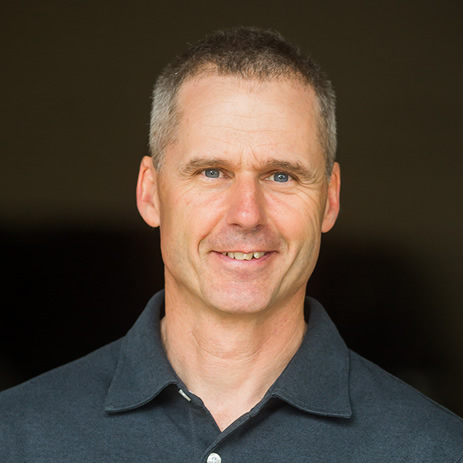
Robert Madsen

Presenter: Robert L. Madsen, P.E., Devco Engineering, Inc.

Robert Madsen is a Principal with Devco Engineering, Inc. in Enterprise, Oregon where he specializes in the design of cold-formed steel framing. He serves on the American Iron and Steel Institute (AISI) Committee on Specifications (COS) and Committee on Framing Standards (COFS), where he is chairman of the Lateral Subcommittee. He is also chairman of the Technical Review Committee of the Cold-Formed Steel Engineers Institute (CFSEI).

In order to receive credit for this course, you must complete the quiz at the end and pass with at least 80% for a certificate to be generated automatically


$100.00 Add to cart
Webinar on the Wonderful World of Buckling

Continuing Education Credits Available – 1.5 PDH Credits

A thin compression element of a cold-formed steel member – such as a flange or a web — may buckle before it reaches its yield stress. Thus, cold-formed steel design involves estimating the influence such buckling has on the strength of a beam or column.

What are these buckling conditions? How do they differ in their behavior? This webinar will explore the basic buckling behaviors encountered as one designs a cold-formed steel beam or column. Emphasis will be placed on the fundamental behavior and highlight the design expressions that enable an engineer to estimate buckling strength.

Join Roger LaBoube, Ph.D., P.E., on this journey through the wonderful world of buckling.
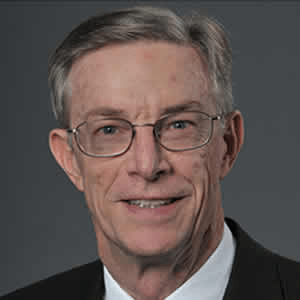
Roger LaBoube, Ph.D., P.E.Presenter: Roger LaBoube, Ph.D., P.E., Cold-Formed Steel Engineers Institute

Dr. Roger A. LaBoube is Curator’s Distinguished Teaching Professor Emeritus of Civil, Architectural and Environmental Engineering and former director of the Wei-Wen Yu Center for Cold-Formed Steel Structures at the Missouri University of Science & Technology. Dr. LaBoube holds B.S., M.S., and Ph.D. degrees in Civil Engineering from the University of Missouri-Rolla. He has an extensive background in the design and behavior of cold-formed steel structures. His research and design activities have touched on many facets of cold-formed steel construction, including cold-formed steel beams, panels, trusses, headers, and wall studs as well as bolt, weld, and screw connections. Dr. LaBoube is active in several professional organizations and societies. He serves as chairman of the American Iron and Steel Institute (AISI) Committee on Framing Standards and is an emeritus member of the AISI Committee on Specifications for the Design of Cold-Formed Steel Structural Members. He is a registered professional engineer in Missouri.

In order to receive credit for this course, you must complete the quiz at the end and pass with at least 80% for a certificate to be generated automatically

Price: $100


$100.00 Add to cart
Webinar on Updates to the AISI North American Specification and Standards

Continuing Education Credits Available – 1.5 PDH Credits

The American Iron and Steel Institute (AISI) has been involved in the support of research and the development and maintenance of cold-formed steel codes, standards and specifications for 90 years. AISI sought American National Standards Institute (ANSI) accreditation and was approved as a developer of American National Standards in 1999.

AISI S100, North American Specification for the Design of Cold-Formed Steel Structural Members and the suite of AISI framing standards are the referenced documents for cold-formed steel design in the International Building Code. Every few years, AISI updates the Specification and standards to add new provisions based on the latest information from research and industry. These updates can deliver improved methods for analyzing members, provide new considerations when designing members and connections, and directly impact the design of floor, wall and roof systems. This webinar will review all of the relevant changes to these AISI documents and how they are intended for implementation into the applicable building codes.

Presenter: Jon-Paul Cardin, P.E.
American Iron and Steel Institute
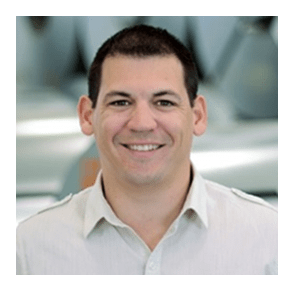
Presenter: Jon-Paul CardinJon-Paul currently serves as a codes and standards engineer for the American Iron and Steel Institute (AISI). In this position, he represents the interests of the steel construction industry in the national codes and standards arenas. Specifically, Jon-Paul is active in the International Code Council (IBC, IRC), ASCE 7 and NFPA 5000, as well as the AISI Committee on Specifications and AISI Committee on Framing Standards. Prior to joining AISI, Jon-Paul served as the engineering manager for a steel framing manufacturer. He holds Bachelor of Science degrees in both Civil Engineering (Structural) and Mathematics from the University of Idaho.

In order to receive credit for this course, you must complete the quiz at the end and pass with at least 80% for a certificate to be generated automatically

Price: $100


$100.00 Add to cart