

Webinar on Overview of Basic Steel Manufacturing and Production of High Strength Low Alloy (HSLA) Steels
$100.00
Continuing Education Credits Available – 1.5 PDH Credits
Primary steel manufacturing is nearly as old as human civilization dating back to the preindustrial days of crucible steel production. However, the industrial revolution accelerated the mass production of steel through the Bessemer process in mid-1800’s. Since then, innovations have continued to fuel the rapid expansion of global steel making capabilities and capacities. But the fundamental principle of steel making has remained unchanged through these times.
This webinar will cover the basic aspects of modern-day steel production and its evolution over time. It will highlight the metallurgical principles driving these processes including a discussion of potential future steel production methods. The presentation will introduce the concept of different steel types with a focus on the development of High Strength Low Alloy (HSLA) steels. The discussion will include the drivers behind the development, typical applications, and future direction of HSLA steels.
Presenter
Norm Bettedpur
Worthington Steel
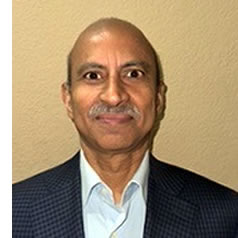
Norm Bettedpur is part of the Technical Services team at Worthington Steel. He obtained his M.S. degree in Metallurgy from Michigan State University. Norm started his career at the Indiana Harbor Works in East Chicago, IN. He has been active in the steel industry for over 25 years and has extensive experience in primary steel making in various capacities.
In order to receive credit for this course, you must complete the quiz at the end and pass with at least 80% for a certificate to be generated automatically
Related Products

Webinar on Vibration Serviceability of Floors with Cold-Formed Steel Framing
Continuing Education Credits Available – 1.5 PDH Credits
Cold-formed steel (CFS) joists and trusses have high strength-to-weight ratios and good overall economy, so they are popular choices for floor framing members. As is the case with most types of floor systems, CFS floors are potentially susceptible to vibrations due to walking and other human activities. This webinar will raise awareness of the importance of vibration serviceability by describing two forensics projects with lively CFS floors. The literature contains several floor vibration evaluation methods that might be applicable to CFS floor. However, unlike other materials, there is not a widely accepted and practical vibration evaluation method for CFS floors. Potential evaluation methods will be discussed.
Presenter: Brad Davis, Ph.D., S.E., P.E.
University of Kentucky
 Brad Davis is an associate professor of civil engineering at the University of Kentucky where he is responsible for all steel design coursework and has received awards recognizing excellence in teaching. As the owner of Davis Structural Engineering, LLC, he provides consulting services for structural vibration, forensics and advanced steel design applications. He is a member of the AISC Committee on Manuals, and is a co-author of AISC Design Guide 11, Vibrations of Steel-Framed Structural Systems Due to Human Activity. Brad has published approximately two dozen journal and conference papers on vibration. He earned his Ph.D. from Virginia Tech and has eight years of experience in building design. He has S.E. and P.E. licenses in 14 states.
In order to receive credit for this course, you must complete the quiz at the end and pass with at least 80% for a certificate to be generated automatically
Webinar on Coordinating Cold-Formed Steel Framing with Metal Buildings
Continuing Education Credits Available – 1.5 PDH Credits
This webinar will address the following topics:
- Provide a brief introduction to metal buildings and their growing use in more diverse markets,
- Identify design and detailing issues when using cold-formed steel framing in metal buildings,
- Use actual project examples to demonstrate detailing and design concerns and solutions,and
- Provide answers to questions from participants.
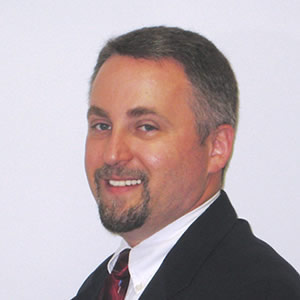
Jeffrey Klaiman, P.E., ADTEK Engineers, Inc.
Jeff has over 20 years of experience in the construction industry. His responsibilities include building maintenance and engineering; on-site engineering for a concrete contractor; Manager of Technical Services and Versa-Truss Product Manager for Dale/Incor (national manufacturer of cold-formed steel framing products and systems), participation on the American Iron and Steel Institute’s Committee on Specifications for the Design of CFS Structural Members and Committee on Framing Standards; a member of CFSEI for more than 10 years; ASTM International and the SFA. Mr. Klaiman serves as chairman of the Standard Practices Subcommittee of the AISI Committee on Framing Standards and is also the president of MASFA. He is a past president of CFSEI. In his position at ADTEK Engineers, Inc. as Principal in Charge of Specialty Engineering, Mr. Klaiman oversees the design and coordination of all cold-formed steel design documents. He also manages in-house staff in three offices for CFS framing design, develops project schedules, and coordinates quality control reviews with project managers on his team. Mr. Klaiman holds a bachelor’s degree in Civil Engineering from the University of Michigan, and an MBA from Eastern Michigan University.
In order to receive credit for this course, you must complete the quiz at the end and pass with at least 80% for a certificate to be generated automatically
Webinar on Roles and Responsibilities for Success with Cold-Formed Steel Framing
The webinar will be presented as a panel interactive session, with Jeffrey Klaiman, P.E., principal in charge of structural engineering at ADTEK Engineers, Inc. as the lead presenter. Panelists will include Don Allen, P.E., director of engineering at Super Stud Building Products, Inc.; Kenneth Pagano, P.E., cold-formed steel truss design engineer at Scosta Corporation; and Patrick W. Ford, P.E., senior project manager at raSmith. The webinar will: Introduce AISI S202, Code of Standard Practice for Cold-Formed Steel Structural Framing and describe how this standard was developed and is maintained. Describe the roles of various individuals and entities in a cold-formed steel framing project. Identify new items and changes in the 2020 edition of the Code of Standard Practice. Provide examples of items in the Code of Standard Practice and how they can be used in actual projects. Include a panel discussion with the authors and users of the standard.
Presenters
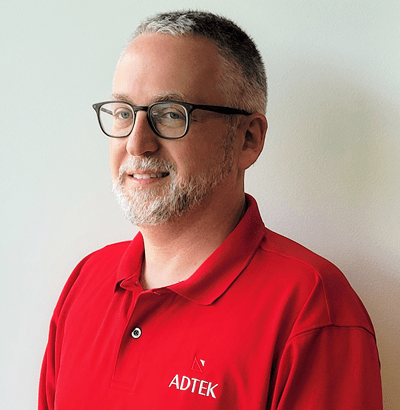
Jeffrey Klaiman, P.E.
ADTEK Engineers, Inc.
Jeff has almost 30 years of experience in the construction industry. His responsibilities include building maintenance and engineering; on-site engineering for a concrete contractor; Manager of Technical Services and Versa-Truss Product Manager for Dale/Incor (national manufacturer of cold-formed steel framing products and systems), participation on the American Iron and Steel Institute’s Committee on Specifications for the Design of CFS Structural Members and Committee on Framing Standards; a member of CFSEI for more than 15 years; ASTM International and the SFA. Mr. Klaiman serves as chairman of the Standard Practices Subcommittee of the AISI Committee on Framing Standards, chairman of the SFIA Technical Committee, and is also the president of MASFA. He is a past president of CFSEI. In his position at ADTEK Engineers, Inc. as Principal in Charge of Structural Engineering, Mr. Klaiman oversees the design and coordination of all cold-formed steel design documents. He also manages in-house staff in four offices for general structural and CFS framing design, develops project schedules, and coordinates quality control reviews with project managers on his team. Mr. Klaiman holds a bachelor’s degree in Civil Engineering from the University of Michigan, and an MBA from Eastern Michigan University.
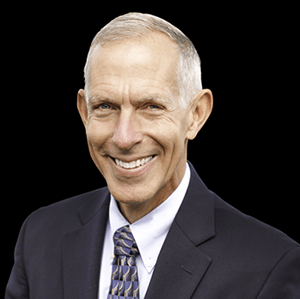
Don Allen, P.E., S.E., LEED AP
Super Stud Building Products
Don Allen, P.E., S.E., LEED AP, is an internationally known expert in cold-formed steel design, and currently serves as director of engineering for Super Stud Building Products. He chairs the AISI Education Committee, is actively involved in the development of ASTM and AISI standards, and has designed projects in Europe, Africa and North America. In addition to working for steel product manufacturers, Don has spent more than a decade in private practice and served over nine years as technical director for the Steel Stud Manufacturers Association (SSMA), the Steel Framing Alliance (SFA) and the Cold-Formed Steel Engineers Institute (CFSEI). At Super Stud, Don is actively involved in product development for multiple product lines including steel framing, MgO structural floor sheathing, steel structural wall panels, exterior insulation and finish systems (EIFS), and steel doors.
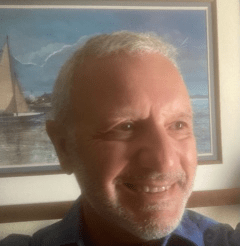
Kenneth (Kenny) J. Pagano, P.E.
Scosta Corporation
Kenneth (Kenny) J. Pagano, P.E. is the cold-formed steel truss design engineer for Scosta Corporation headquartered in Sebring, FL. Kenny also serves on the AISI Committee on Framing Standard’s main Committee as well as the Framing and Standard Practices Sub-Committees. Kenny maintains an office outside of Palatka, FL where he is an Adjunct Professor for the Engineering Technology department at the local college – St Johns River State College.
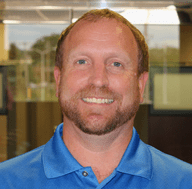
Patrick M. Hainault, P.E.
raSmith
Patrick M. Hainault, P.E. is the cold-formed group leader at raSmith in Brookfield, Wisconsin. His experience includes engineering design and staff management with raSmith and Matsen Ford Design Associates, Inc., where he was a principal and senior engineer for 21 years. His expertise includes application of the latest technologies and design concepts to a wide variety of primary and secondary structures, including prefabricated systems. In addition to specialty expertise in cold-formed steel, his engineering systems design experience includes structural steel, reinforced concrete, engineered masonry and wood. He was a structural designer for a concrete reinforcement supplier and a technician for a national material-testing firm. Patrick is a member of the SFIA Technical Committee and the AWCI Construction Technology Committee. He is a registered Professional Engineer in Wisconsin and several other states. He earned his Bachelor of Science degree in Civil Engineering from Marquette University.
In order to receive credit for this course, you must complete the quiz at the end and pass with at least 80% for a certificate to be generated automatically
Webinar on Devil in the Details: Learning from Mid-Rise Successes and Failures
Continuing Education Credits Available – 1.5 PDH Credits
Industry veteran Don Allen provides insights, photos, and details from projects that have worked, and some that have not. With over 25 years of both Engineer-of- Record and CFS specialty engineer experience, Allen will show both design examples and field photos / repairs where problems have been avoided / created / resolved on CFS framing projects. Allen will discuss each specific design challenge, why a certain approach was taken, what went right with the design and construction, and what could have been done differently for conditions that did not work. Allen will also discuss some of his recent work overseas, and how innovations worldwide are shaping CFS construction in North America.
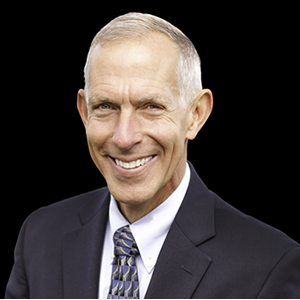 Presenter: Don Allen, P.E., Super Stud Building Products, Inc.
Don Allen, P.E. currently serves as Director of Engineering for Super Stud Building Products, Inc., where he oversees product development, testing, engineering, and technical services. Having worked in the cold-formed steel industry since 1990, Allen served as a CFS specialty engineer, Engineer-of-Record, and industry representative before his current position with a stud manufacturer. He concurrently served for more than 9 years as Technical Director for three associations in the cold-formed steel industry – the Steel Stud Manufacturers Association (SSMA), the Steel Framing Alliance (SFA), and the Cold-Formed Steel Engineers Institute (CFSEI). He chairs the Education Subcommittee of the American Iron and Steel Institute’s Committee on Framing Standards and Committee on Specifications, and was the 2013 recipient of the CFSEI Distinguished Service Award. He has given presentations on CFS in China, Colombia, Egypt, Hawaii, and South Africa, and has been involved in design projects in North America, Africa, and Europe.
In order to receive credit for this course, you must complete the quiz at the end and pass with at least 80% for a certificate to be generated automatically
Webinar on Demystifying Cold-Formed Steel Torsion Analysis for Design
Continuing Education Credits Available – 1.5 PDH Credits
Cold-formed steel structural members are commonly subjected to torsion. The torsional behavior of open cross-sections can be complex, involving both warping torsion and St. Venant torsion. Most structural engineering curriculums do not teach this combined torsion response, leaving many engineers with limited ability to properly design for torsion. To complicate matters, most structural analysis software does not fully capture the torsional behavior for cold-formed steel members.
This webinar will review some torsion fundamentals and explain torsion distribution using analogies to flexural behavior familiar to structural engineers. The similarity to flexure will be demonstrated using the CFS® software. The AISI design provisions for combined bending and torsion will be reviewed, and the application of these provisions will be evaluated with several design examples.
Presenter: Bob Glauz, P.E., MSCE
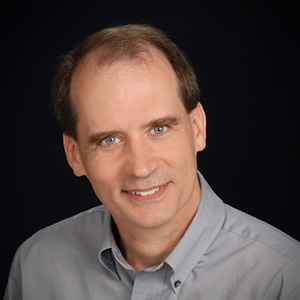
Bob Glauz is the author of the CFS® software used internationally for cold-formed steel design. He is a member of the American Iron and Steel Institute (AISI) Committee on Specifications and chairs the AISI Committee on Member Design. He is also a member of the ASCE/SEI Standards Committee on Stainless Steel Cold-Formed Sections, the Structural Stability Research Council (SSRC) and the SSRC Task Group on Stability of Steel Members. Bob has authored several technical articles on lateral-torsional, flexural-torsional, and distortional buckling of cold-formed steel members.
In order to receive credit for this course, you must complete the quiz at the end and pass with at least 80% for a certificate to be generated automatically
Webinar on the Wonderful World of Buckling
Continuing Education Credits Available – 1.5 PDH Credits
A thin compression element of a cold-formed steel member – such as a flange or a web — may buckle before it reaches its yield stress. Thus, cold-formed steel design involves estimating the influence such buckling has on the strength of a beam or column.
What are these buckling conditions? How do they differ in their behavior? This webinar will explore the basic buckling behaviors encountered as one designs a cold-formed steel beam or column. Emphasis will be placed on the fundamental behavior and highlight the design expressions that enable an engineer to estimate buckling strength.
Join Roger LaBoube, Ph.D., P.E., on this journey through the wonderful world of buckling.
 Presenter: Roger LaBoube, Ph.D., P.E., Cold-Formed Steel Engineers Institute
Dr. Roger A. LaBoube is Curator’s Distinguished Teaching Professor Emeritus of Civil, Architectural and Environmental Engineering and former director of the Wei-Wen Yu Center for Cold-Formed Steel Structures at the Missouri University of Science & Technology. Dr. LaBoube holds B.S., M.S., and Ph.D. degrees in Civil Engineering from the University of Missouri-Rolla. He has an extensive background in the design and behavior of cold-formed steel structures. His research and design activities have touched on many facets of cold-formed steel construction, including cold-formed steel beams, panels, trusses, headers, and wall studs as well as bolt, weld, and screw connections. Dr. LaBoube is active in several professional organizations and societies. He serves as chairman of the American Iron and Steel Institute (AISI) Committee on Framing Standards and is an emeritus member of the AISI Committee on Specifications for the Design of Cold-Formed Steel Structural Members. He is a registered professional engineer in Missouri.
In order to receive credit for this course, you must complete the quiz at the end and pass with at least 80% for a certificate to be generated automatically
Price: $100
Webinar on Practical Allyship – 5 Actions Anyone Can Do to Promote Inclusion at Work
Continuing Education Credits Available – 1.5 PDH Credits
Creating an inclusive work environment is not just the “right thing to do.” Inclusive behaviors are tied to higher levels of individual performance and firm profits; yet creating and working in an inclusive work environment often feels elusive, as evidenced by the fact that almost two-thirds of workers are disengaged at work.
In this interactive session, you will learn about the business case for inclusive work cultures and five simple actions anyone can take to create a more inclusive work environment for those they work with, regardless of current role or firm size. Applicable to everyone from new graduates to CEOs, these strategies have been shown to create a more inclusive work environment while requiring little time or budget to implement. When implemented consistently, these strategies create better work cultures for everyone and improve the retention of coworkers in traditionally marginalized gender, racial, and ethnic groups. You will leave this session empowered with specific actions you can immediately apply to engineer inclusion in your everyday interactions.
Presenter: Stephanie Slocum, P.E., Engineers Rising LLC
 Stephanie Slocum, P.E. is the founder of Engineers Rising LLC and author of “She Engineers: Outsmart Bias, Unlock Your Potential, and Live the Engineering Career of your Dreams.” Stephanie shines light on the barriers to the retention of engineers and provides practical training, inspiration, and mentorship through her online platform and programs. She is a champion of inclusive work cultures.
Stephanie is the current chair of the Structural Engineering Institute’s (SEI) Business Practices committee. She is currently serving as an elected member of SEI’s Board of Governors and is a member of the American Society of Civil Engineers (ASCE) Task Committee on the Code of Ethics. She is a winner of the 2020 Connected World’s Women in Technology Award for her work empowering women in engineering. Prior to founding Engineers Rising, she worked in structural engineering building consulting for 15 years. She holds bachelor’s and master’s degrees in architectural engineering.
In order to receive credit for this course, you must complete the quiz at the end and pass with at least 80% for a certificate to be generated automatically
Webinar on Post-Installed Anchor Testing, Qualification, and Design Procedure
Continuing Education Credits Available – 1.5 PDH Credits
Structural and non-structural elements are often connected to concrete structures by means of concrete anchors. Anchors are either cast-in the concrete during construction, or post-installed when the concrete has cured. There are various concrete anchor types with different behavioral characteristics. The designer must select the type, size and embedment most suitable for the given situation. Due to the large diversity in product types and makes, anchors are not standardized and products need to be qualified for their intended use. For this, suitability and serviceability tests on individual anchors are carried out in independent test laboratories. Evaluation of the test results ultimately result in the issuing of technical approvals which also provide the necessary data to carry out safe anchor design. In this webinar, the process for testing and qualification of post installed anchors, relevant building code and acceptance criteria will be discussed along with the design procedure, failure modes, and the factors affecting the failure mode.
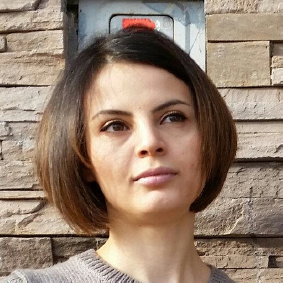 Presenter: Natasha Zamani, Ph.D., P.E.
Natasha Zamani received her Ph.D. in Civil Engineering from Southern Methodist University with a focus on numerical analysis of seismic soil-foundation-structure interaction. She is a registered professional engineer in Texas. Currently, she is working at Hilti as the Code and Standards Senior Manager. She is responsible for implementing and driving the code and approval strategy for Hilti installation product line or related modular cold formed systems.
In order to receive credit for this course, you must complete the quiz at the end and pass with at least 80% for a certificate to be generated automatically