

Webinar on Practical Allyship – 5 Actions Anyone Can Do to Promote Inclusion at Work
$100.00
Continuing Education Credits Available – 1.5 PDH Credits
Creating an inclusive work environment is not just the “right thing to do.” Inclusive behaviors are tied to higher levels of individual performance and firm profits; yet creating and working in an inclusive work environment often feels elusive, as evidenced by the fact that almost two-thirds of workers are disengaged at work.
In this interactive session, you will learn about the business case for inclusive work cultures and five simple actions anyone can take to create a more inclusive work environment for those they work with, regardless of current role or firm size. Applicable to everyone from new graduates to CEOs, these strategies have been shown to create a more inclusive work environment while requiring little time or budget to implement. When implemented consistently, these strategies create better work cultures for everyone and improve the retention of coworkers in traditionally marginalized gender, racial, and ethnic groups. You will leave this session empowered with specific actions you can immediately apply to engineer inclusion in your everyday interactions.
Presenter: Stephanie Slocum, P.E., Engineers Rising LLC
 Stephanie Slocum, P.E. is the founder of Engineers Rising LLC and author of “She Engineers: Outsmart Bias, Unlock Your Potential, and Live the Engineering Career of your Dreams.” Stephanie shines light on the barriers to the retention of engineers and provides practical training, inspiration, and mentorship through her online platform and programs. She is a champion of inclusive work cultures.
Stephanie is the current chair of the Structural Engineering Institute’s (SEI) Business Practices committee. She is currently serving as an elected member of SEI’s Board of Governors and is a member of the American Society of Civil Engineers (ASCE) Task Committee on the Code of Ethics. She is a winner of the 2020 Connected World’s Women in Technology Award for her work empowering women in engineering. Prior to founding Engineers Rising, she worked in structural engineering building consulting for 15 years. She holds bachelor’s and master’s degrees in architectural engineering.
In order to receive credit for this course, you must complete the quiz at the end and pass with at least 80% for a certificate to be generated automatically
Related Products

Webinar on The New AISI Shear Wall Design Guide – AISI-D113-19
Continuing Education Credits Available – 1.5 PDH Credits
The webinar will provide an overview of shear wall design principles as presented in AISI D113-19 including: Load Path; Wind and Seismic Considerations; Type I and II Shear Wall concepts; Shear Wall Deflection. Design examples will also be presented.
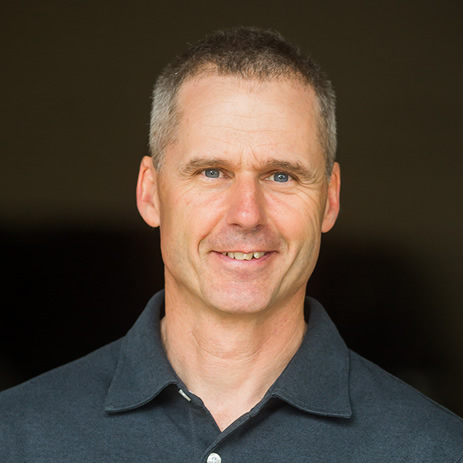
Presenter: Robert L. Madsen, P.E., Devco Engineering, Inc.
Robert Madsen is a Principal with Devco Engineering, Inc. in Enterprise, Oregon where he specializes in the design of cold-formed steel framing. He serves on the American Iron and Steel Institute (AISI) Committee on Specifications (COS) and Committee on Framing Standards (COFS), where he is chairman of the Lateral Subcommittee. He is also chairman of the Technical Review Committee of the Cold-Formed Steel Engineers Institute (CFSEI).
In order to receive credit for this course, you must complete the quiz at the end and pass with at least 80% for a certificate to be generated automatically
Webinar on Cold-Formed Steel Classroom: Design Topics Not in a Design Standard
Continuing Education Credits Available – 1.5 PDH Credits
Last year alone the CFSEI Hotline responded to over 4,800 inquires. These inquires cover the gamut of cold-formed steel applications. Because these questions often are beyond the scope of a design standard engineering judgement is needed. Roger will review a few of the Hotline topics with a focus on employing engineering principals to solve everyday design considerations. Topics to be addressed are:
- Should loose straps be a concern?
- Does gypsum between the steel plies impact the screw connection strength?
- For the single-side strap brace, what are the implications for the design of the boundary post?
- How does one design a shear wall for force transfer around openings?
- What wind loading drift limits are appropriate for mid-rise structures?
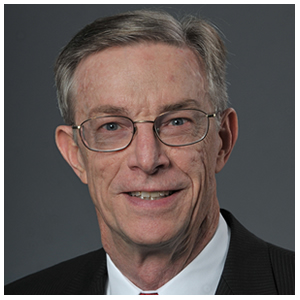 Presenter: Roger LaBoube, Ph.D., P.E.
Wei-Wen Yu Center for Cold-Formed Steel Structures
Roger LaBoube, Ph.D., P.E. is Curator’s Distinguished Teaching Professor Emeritus of Civil, Architectural and Environmental Engineering and Director of the Wei-Wen Yu Center for Cold-Formed Steel Structures at the Missouri University of Science & Technology (formerly University of Missouri-Rolla). Dr. LaBoube holds B.S., M.S., and Ph.D. degrees in Civil Engineering from the University of Missouri-Rolla. Dr. LaBoube has an extensive background in the design and behavior of cold-formed steel structures. His research and design activities have touched on many facets of cold-formed steel construction including cold-formed steel beams, panels, trusses, headers, and wall studs as well as bolt, weld, and screw connections. He is active in several professional organizations and societies, including membership on the American Iron and Steel Institute’s Committee on Specifications for the Design of Cold-Formed Steel Structural Members and chairman of the AISI Committee on Framing Standards. He is a registered Professional Engineer in Missouri.
In order to receive credit for this course, you must complete the quiz at the end and pass with at least 80% for a certificate to be generated automatically
Webinar on Design Considerations for Cold-Formed Steel Light Frame Diaphragms
Continuing Education Credits Available – 1.5 PDH Credits
This webinar will cover the basic design of cold-formed steel light frame diaphragms as envisioned in the provisions articulated in AISI S100-16, North American Specification for the Design of Cold-Formed Steel Structural Members, 2016 Edition; AISI S230-19, North American Standard for Cold-Formed Steel Framing―Prescriptive Method for One- and Two-Family Dwellings, 2019 Edition; AISI S400-15 w/S1-16, North American Standard for Seismic Design of Cold-Formed Steel Structural Systems, 2015 Edition with Supplement 1; and AISI S240-15, North American Standard for Cold-Formed Steel Structural Framing, 2015 Edition. Design practice documents derived from these AISI Standards will also be addressed. At the conclusion of this webinar, design professionals will have a better understanding of current provisions that support engineered design (strength and deflection) of conventional codebased light frame cold-formed steel diaphragms as well as the limitations of these provisions.
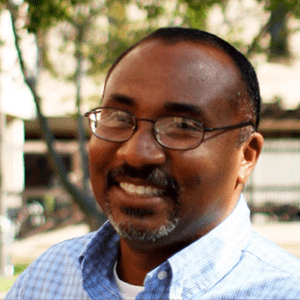
Presenter: Reynald Serrette, Ph.D.,
Santa Clara University
Reynaud Serrette, Ph.D. is a professor in the Department of Civil, Environmental and Sustainable Engineering at Santa Clara University in Santa Clara, California. He has been involved in cold-formed steel research and design since 1987.
In order to receive credit for this course, you must complete the quiz at the end and pass with at least 80% for a certificate to be generated automatically
Webinar on Frequently Misunderstood Wind Load Topics for Cold-Formed Steel Structures
Continuing Education Credits Available – 1.5 PDH Credits
The webinar will focus on wind provisions of ASCE 7/ IBC (International Building Code) that are frequently misunderstood or incorrectly applied with a particular emphasis on cold-formed steel structures, including building enclosure classification, torsional wind design, wind load analysis methods, canopies, rooftop screen walls, and effective wind area. It will also focus on ASCE 7-16 changes and explore the future of wind design.
Presenter: Emily Guglielmo, P.E., S.E., F.SEI, Martin/Martin
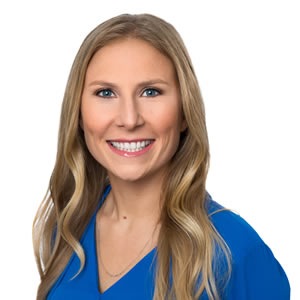
Emily Guglielmo, P.E., S.E., F.SEI, a Principal with Martin/Martin, will conduct the webinar. With more than 15 years of structural engineering experience, Emily began her career in the Denver, Colorado office of Martin/Martin and now manages the firm’s San Francisco Bay area office. She is President of the National Council of Structural Engineers Associations (NCSEA) and President of the Structural Engineers Association of Northern California (SEAONC). She is also the Chair of the NCSEA Wind Engineering Committee and Vice Chair of the ASCE 7 Seismic Subcommittee. She serves as a voting member on the ASCE 7 Wind, Seismic, and Main Committees. Emily has presented more than 100 lectures on seismic, wind, and building code provisions both nationally and internationally. She has received several awards, including SEI Fellow and the Susan M. Frey NCSEA Educator Award for effective instruction for practicing structural engineers. Emily earned her bachelor’s degree in Civil Engineering from UCLA and her master’s degree in Structural Engineering from UC Berkeley.
In order to receive credit for this course, you must complete the quiz at the end and pass with at least 80% for a certificate to be generated automatically
Webinar on the Wonderful World of Buckling
Continuing Education Credits Available – 1.5 PDH Credits
A thin compression element of a cold-formed steel member – such as a flange or a web — may buckle before it reaches its yield stress. Thus, cold-formed steel design involves estimating the influence such buckling has on the strength of a beam or column.
What are these buckling conditions? How do they differ in their behavior? This webinar will explore the basic buckling behaviors encountered as one designs a cold-formed steel beam or column. Emphasis will be placed on the fundamental behavior and highlight the design expressions that enable an engineer to estimate buckling strength.
Join Roger LaBoube, Ph.D., P.E., on this journey through the wonderful world of buckling.
 Presenter: Roger LaBoube, Ph.D., P.E., Cold-Formed Steel Engineers Institute
Dr. Roger A. LaBoube is Curator’s Distinguished Teaching Professor Emeritus of Civil, Architectural and Environmental Engineering and former director of the Wei-Wen Yu Center for Cold-Formed Steel Structures at the Missouri University of Science & Technology. Dr. LaBoube holds B.S., M.S., and Ph.D. degrees in Civil Engineering from the University of Missouri-Rolla. He has an extensive background in the design and behavior of cold-formed steel structures. His research and design activities have touched on many facets of cold-formed steel construction, including cold-formed steel beams, panels, trusses, headers, and wall studs as well as bolt, weld, and screw connections. Dr. LaBoube is active in several professional organizations and societies. He serves as chairman of the American Iron and Steel Institute (AISI) Committee on Framing Standards and is an emeritus member of the AISI Committee on Specifications for the Design of Cold-Formed Steel Structural Members. He is a registered professional engineer in Missouri.
In order to receive credit for this course, you must complete the quiz at the end and pass with at least 80% for a certificate to be generated automatically
Price: $100
Webinar on Coordinating Cold-Formed Steel Framing with Metal Buildings
Continuing Education Credits Available – 1.5 PDH Credits
This webinar will address the following topics:
- Provide a brief introduction to metal buildings and their growing use in more diverse markets,
- Identify design and detailing issues when using cold-formed steel framing in metal buildings,
- Use actual project examples to demonstrate detailing and design concerns and solutions,and
- Provide answers to questions from participants.
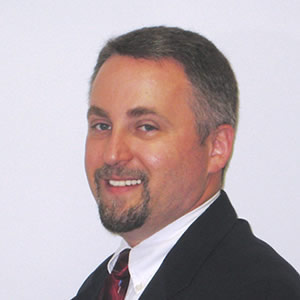
Jeffrey Klaiman, P.E., ADTEK Engineers, Inc.
Jeff has over 20 years of experience in the construction industry. His responsibilities include building maintenance and engineering; on-site engineering for a concrete contractor; Manager of Technical Services and Versa-Truss Product Manager for Dale/Incor (national manufacturer of cold-formed steel framing products and systems), participation on the American Iron and Steel Institute’s Committee on Specifications for the Design of CFS Structural Members and Committee on Framing Standards; a member of CFSEI for more than 10 years; ASTM International and the SFA. Mr. Klaiman serves as chairman of the Standard Practices Subcommittee of the AISI Committee on Framing Standards and is also the president of MASFA. He is a past president of CFSEI. In his position at ADTEK Engineers, Inc. as Principal in Charge of Specialty Engineering, Mr. Klaiman oversees the design and coordination of all cold-formed steel design documents. He also manages in-house staff in three offices for CFS framing design, develops project schedules, and coordinates quality control reviews with project managers on his team. Mr. Klaiman holds a bachelor’s degree in Civil Engineering from the University of Michigan, and an MBA from Eastern Michigan University.
In order to receive credit for this course, you must complete the quiz at the end and pass with at least 80% for a certificate to be generated automatically
Webinar on Devil in the Details: Learning from Mid-Rise Successes and Failures
Continuing Education Credits Available – 1.5 PDH Credits
Industry veteran Don Allen provides insights, photos, and details from projects that have worked, and some that have not. With over 25 years of both Engineer-of- Record and CFS specialty engineer experience, Allen will show both design examples and field photos / repairs where problems have been avoided / created / resolved on CFS framing projects. Allen will discuss each specific design challenge, why a certain approach was taken, what went right with the design and construction, and what could have been done differently for conditions that did not work. Allen will also discuss some of his recent work overseas, and how innovations worldwide are shaping CFS construction in North America.
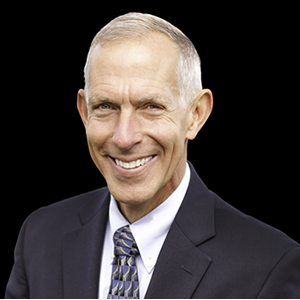 Presenter: Don Allen, P.E., Super Stud Building Products, Inc.
Don Allen, P.E. currently serves as Director of Engineering for Super Stud Building Products, Inc., where he oversees product development, testing, engineering, and technical services. Having worked in the cold-formed steel industry since 1990, Allen served as a CFS specialty engineer, Engineer-of-Record, and industry representative before his current position with a stud manufacturer. He concurrently served for more than 9 years as Technical Director for three associations in the cold-formed steel industry – the Steel Stud Manufacturers Association (SSMA), the Steel Framing Alliance (SFA), and the Cold-Formed Steel Engineers Institute (CFSEI). He chairs the Education Subcommittee of the American Iron and Steel Institute’s Committee on Framing Standards and Committee on Specifications, and was the 2013 recipient of the CFSEI Distinguished Service Award. He has given presentations on CFS in China, Colombia, Egypt, Hawaii, and South Africa, and has been involved in design projects in North America, Africa, and Europe.
In order to receive credit for this course, you must complete the quiz at the end and pass with at least 80% for a certificate to be generated automatically
Webinar on Cold-Formed Steel Attachment to Concrete in Seismic Zones
Continuing Education Credits Available – 1.5 PDH Credits
For decades, Power- Actuated Fasteners (PAFs) have been used in the construction industry as a safe, reliable, and productive method to fasten various building components-such as cold-formed steel (CFS) framing-to steel and concrete. Code provisions for the use of PAFs in seismic areas for attachments of cold-formed metal framing to concrete have been subject to various interpretations. This presentation will provide recommendations based on Hilti’s understanding of the code provisions.
AISI S100-16, North American Specification for the Design of Cold-Formed Steel Structural Members, 2016 Edition (including the latest supplements), provides some basic provisions regarding calculation of the shear and tension resistance of a connection between CFS and concrete, but does not provide specific equations or values. In addition, Chapter 13 of ASCE/SEI 7-16, Minimum Design Loads and Associated Criteria for Buildings and Other Structures, includes some restrictions regarding the use of PAFs in Seismic Design Categories (SDC) D, E, and F. Chapter 13 is entitled “Seismic Design Requirements for Nonstructural Components,” so the focus is on nonstructural applications like partition walls.
This presentation is designed to clarify the intent of the language in the code-referenced publications AISI S100 and ASCE/SEI 7-16 as it relates to PAFs used to attach track to concrete, in SDC A-C and SDC E-F. The presentation will also provide practical guidance to the designer regarding which design values should be used and where those values can be obtained. Additional practical recommendations will be provided regarding the specification of various types of PAFs and their embedment depths into the concrete.
Christopher Gill, Hilti Inc.
Chris Gill is the Technical Services Manager for Direct Fastening at Hilti in Plano, Texas. He is responsible for the department which performs product testing, generates technical data, publishes technical documents, and obtains approvals and listings for power-actuated and screw-fastening products. He is a member of the American Iron and Steel Institute (AISI) Committee on Specifications, and a voting member of its subcommittees responsible for connections and joints, and diaphragm design. Chris recently participated in the 2020 NEHRP Provisions Update Committee, Issue Team 9, which addressed alternate provisions for seismic diaphragm design, and recommended new provisions for incorporation into ASCE/SEI 7. He has also contributed to the soon-to-be published ASCE/ SEI Design Guide “Cold-Formed Steel Connections to Other Materials.”
Chris has a total of 33 years working in the fastening and anchoring industry. He previously worked as a field engineer, field engineering manager, trade manager and product manager with Hilti. He holds a B.S. degree in Engineering from Brown University and an M.S. degree in Engineering and Technology Management from Oklahoma State University.
In order to receive credit for this course, you must complete the quiz at the end and pass with at least 80% for a certificate to be generated automatically