

Webinar on the Built-Up Member Design Considerations
$100.00
Continuing Education Credits Available – 1.5 PDH Credits
What can be done when a structural member requires a high-load capacity? The common solution is to design a built-up profile consisting of two or more cold-formed steel (CFS) framing sections. Built-up profiles use common CFS framing members, such as shear wall boundary studs, floor joists, stud packs and headers. This webinar will review the applicable AISI S100, North American Specification for the Design of Cold-Formed Steel Structural Members and AISI S240, North American Standard for Cold-Formed Steel Structural Framing design provisions for two types of built-up profiles — built-up compression members and built-up flexural members. The webinar will review the member limit states of global buckling, local buckling and distortional buckling. It will also provide guidance for achieving adequate interconnection of the individual profiles.
 Presenter: Roger LaBoube, Ph.D., P.E., Cold-Formed Steel Engineers Institute
Dr. Roger A. LaBoube is Curator’s Distinguished Teaching Professor Emeritus of Civil, Architectural and Environmental Engineering and former director of the Wei-Wen Yu Center for Cold-Formed Steel Structures at the Missouri University of Science & Technology. Dr. LaBoube holds B.S., M.S., and Ph.D. degrees in Civil Engineering from the University of Missouri-Rolla. He has an extensive background in the design and behavior of cold-formed steel structures. His research and design activities have touched on many facets of cold-formed steel construction, including cold-formed steel beams, panels, trusses, headers, and wall studs as well as bolt, weld, and screw connections. Dr. LaBoube is active in several professional organizations and societies. He serves as chairman of the American Iron and Steel Institute Committee on Framing Standards and is an emeritus member of the AISI Committee on Specifications for the Design of Cold-Formed Steel Structural Members. He is a registered professional engineer in Missouri.
In order to receive credit for this course, you must complete the quiz at the end and pass with at least 80% for a certificate to be generated automatically
Price: $100
Related Products

Webinar on the Wonderful World of Buckling
Continuing Education Credits Available – 1.5 PDH Credits
A thin compression element of a cold-formed steel member – such as a flange or a web — may buckle before it reaches its yield stress. Thus, cold-formed steel design involves estimating the influence such buckling has on the strength of a beam or column.
What are these buckling conditions? How do they differ in their behavior? This webinar will explore the basic buckling behaviors encountered as one designs a cold-formed steel beam or column. Emphasis will be placed on the fundamental behavior and highlight the design expressions that enable an engineer to estimate buckling strength.
Join Roger LaBoube, Ph.D., P.E., on this journey through the wonderful world of buckling.
Presenter: Roger LaBoube, Ph.D., P.E., Cold-Formed Steel Engineers Institute
Dr. Roger A. LaBoube is Curator’s Distinguished Teaching Professor Emeritus of Civil, Architectural and Environmental Engineering and former director of the Wei-Wen Yu Center for Cold-Formed Steel Structures at the Missouri University of Science & Technology. Dr. LaBoube holds B.S., M.S., and Ph.D. degrees in Civil Engineering from the University of Missouri-Rolla. He has an extensive background in the design and behavior of cold-formed steel structures. His research and design activities have touched on many facets of cold-formed steel construction, including cold-formed steel beams, panels, trusses, headers, and wall studs as well as bolt, weld, and screw connections. Dr. LaBoube is active in several professional organizations and societies. He serves as chairman of the American Iron and Steel Institute (AISI) Committee on Framing Standards and is an emeritus member of the AISI Committee on Specifications for the Design of Cold-Formed Steel Structural Members. He is a registered professional engineer in Missouri.
In order to receive credit for this course, you must complete the quiz at the end and pass with at least 80% for a certificate to be generated automatically
Price: $100
Webinar on Updates to the AISI North American Specification and Standards
Continuing Education Credits Available – 1.5 PDH Credits
The American Iron and Steel Institute (AISI) has been involved in the support of research and the development and maintenance of cold-formed steel codes, standards and specifications for 90 years. AISI sought American National Standards Institute (ANSI) accreditation and was approved as a developer of American National Standards in 1999.
AISI S100, North American Specification for the Design of Cold-Formed Steel Structural Members and the suite of AISI framing standards are the referenced documents for cold-formed steel design in the International Building Code. Every few years, AISI updates the Specification and standards to add new provisions based on the latest information from research and industry. These updates can deliver improved methods for analyzing members, provide new considerations when designing members and connections, and directly impact the design of floor, wall and roof systems. This webinar will review all of the relevant changes to these AISI documents and how they are intended for implementation into the applicable building codes.
Presenter: Jon-Paul Cardin, P.E.
American Iron and Steel Institute
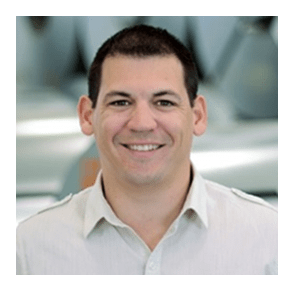 Jon-Paul currently serves as a codes and standards engineer for the American Iron and Steel Institute (AISI). In this position, he represents the interests of the steel construction industry in the national codes and standards arenas. Specifically, Jon-Paul is active in the International Code Council (IBC, IRC), ASCE 7 and NFPA 5000, as well as the AISI Committee on Specifications and AISI Committee on Framing Standards. Prior to joining AISI, Jon-Paul served as the engineering manager for a steel framing manufacturer. He holds Bachelor of Science degrees in both Civil Engineering (Structural) and Mathematics from the University of Idaho.
In order to receive credit for this course, you must complete the quiz at the end and pass with at least 80% for a certificate to be generated automatically
Price: $100
Webinar on Coordinating Cold-Formed Steel Framing with Metal Buildings
Continuing Education Credits Available – 1.5 PDH Credits
This webinar will address the following topics:
- Provide a brief introduction to metal buildings and their growing use in more diverse markets,
- Identify design and detailing issues when using cold-formed steel framing in metal buildings,
- Use actual project examples to demonstrate detailing and design concerns and solutions,and
- Provide answers to questions from participants.
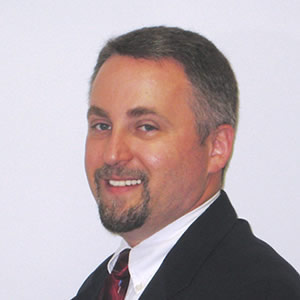
Jeffrey Klaiman, P.E., ADTEK Engineers, Inc.
Jeff has over 20 years of experience in the construction industry. His responsibilities include building maintenance and engineering; on-site engineering for a concrete contractor; Manager of Technical Services and Versa-Truss Product Manager for Dale/Incor (national manufacturer of cold-formed steel framing products and systems), participation on the American Iron and Steel Institute’s Committee on Specifications for the Design of CFS Structural Members and Committee on Framing Standards; a member of CFSEI for more than 10 years; ASTM International and the SFA. Mr. Klaiman serves as chairman of the Standard Practices Subcommittee of the AISI Committee on Framing Standards and is also the president of MASFA. He is a past president of CFSEI. In his position at ADTEK Engineers, Inc. as Principal in Charge of Specialty Engineering, Mr. Klaiman oversees the design and coordination of all cold-formed steel design documents. He also manages in-house staff in three offices for CFS framing design, develops project schedules, and coordinates quality control reviews with project managers on his team. Mr. Klaiman holds a bachelor’s degree in Civil Engineering from the University of Michigan, and an MBA from Eastern Michigan University.
In order to receive credit for this course, you must complete the quiz at the end and pass with at least 80% for a certificate to be generated automatically
Webinar on Overview of the Fundamental Behavior of Cold-Formed Steel Members and Connections
Continuing Education Credits Available – 1.5 PDH Credits
The concepts of cold-formed steel behavior and design are not typically taught in engineering schools and therefore engineers are often required to self-teach these concepts. Therefore, if you are an entry level structural engineer, or a seasoned veteran, this CFSEI lecture is intended to provide a fundamental understanding of the some of the behavior and design principles for cold-formed steel members and connections. Roger will draw on lecture materials used in his semester course and three-day short course to explain the unique aspects of cold-formed steel behavior and design principles of AISI S100.
Roger A. LaBoube, Ph.D., P.E.,
Wei-Wen Yu Center for Cold-Formed Steel Structures
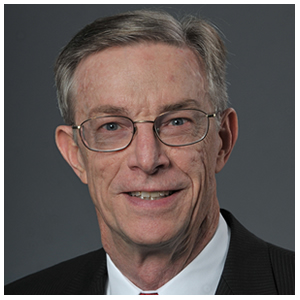 Dr. Roger A. LaBoube is Curators’ Distinguished Teaching Professor Emeritus of Civil, Architectural and Environmental Engineering and former director of the Wei-Wen Yu Center for Cold-Formed Steel Structures (CCFSS) at the Missouri University of Science & Technology, formerly known as the University of Missouri-Rolla. Dr. LaBoube holds B.S., M.S., and Ph.D. degrees in Civil Engineering from the University of Missouri-Rolla. He has an extensive background in the design and behavior of cold-formed steel structures. His research and design activities have touched on many facets of cold-formed steel construction, including cold-formed steel beams; panels; trusses; headers; wall studs; and bolt, weld, and screw connections. Dr. LaBoube is active in several professional organizations and societies, including membership on the American Iron and Steel Institute’s (AISI) Committee on Specifications and as chairman of AISI’s Committee on Framing Standards. He is a registered Professional Engineer in Missouri. Dr. LaBoube is a frequent presenter of CFSEI webinars, answers questions from engineers through the CFSEI Hotline, and remains active in developing cold-formed steel standards through the AISI Committee on Framing Standards.
In order to receive credit for this course, you must complete the quiz at the end and pass with at least 80% for a certificate to be generated automatically
Webinar on Fire and Cold-Formed Steel Design
Continuing Education Credits Available – 1.5 PDH Credits
Fire Resistance of Wall, Floor & Ceiling Systems
The presentation will begin with a review of the standards used to test both wall and floor/ceiling assemblies. Special attention will be given to factors that affect the design of systems with cold-formed steel, and some comparisons will be made to wood-framed systems. Several UL-certified fire designs will be described that showcase how structural factors can affect fire design.
Presenter: Kyle Flondor, United States Gypsum Corporation.
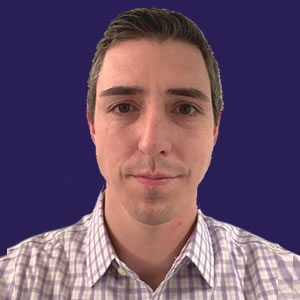 Kyle Flonder is a Senior Researcher, Building Science (Fire) at United States Gypsum Corporation. He received his Bachelor of Science degree in Industrial Engineering from the University of Iowa. From 2006-2017, he was project engineer in UL’s Fire Protection Division, responsible for the evaluation and certification of fire containment and building fenestration products. He moved to USG in 2017 to support the evaluation of USG products and systems through testing and analysis. He is one of the principal USG engineers who work with accredited testing agencies, and he assists most Authorities Having Jurisdiction with large and small projects involving USG products and fire designs.
In order to receive credit for this course, you must complete the quiz at the end and pass with at least 80% for a certificate to be generated automatically
Webinar on Demystifying Cold-Formed Steel Torsion Analysis for Design
Continuing Education Credits Available – 1.5 PDH Credits
Cold-formed steel structural members are commonly subjected to torsion. The torsional behavior of open cross-sections can be complex, involving both warping torsion and St. Venant torsion. Most structural engineering curriculums do not teach this combined torsion response, leaving many engineers with limited ability to properly design for torsion. To complicate matters, most structural analysis software does not fully capture the torsional behavior for cold-formed steel members.
This webinar will review some torsion fundamentals and explain torsion distribution using analogies to flexural behavior familiar to structural engineers. The similarity to flexure will be demonstrated using the CFS® software. The AISI design provisions for combined bending and torsion will be reviewed, and the application of these provisions will be evaluated with several design examples.
Presenter: Bob Glauz, P.E., MSCE
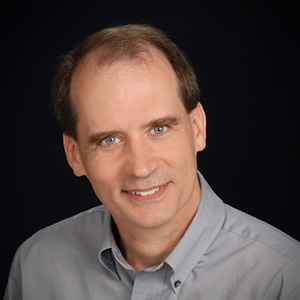
Bob Glauz is the author of the CFS® software used internationally for cold-formed steel design. He is a member of the American Iron and Steel Institute (AISI) Committee on Specifications and chairs the AISI Committee on Member Design. He is also a member of the ASCE/SEI Standards Committee on Stainless Steel Cold-Formed Sections, the Structural Stability Research Council (SSRC) and the SSRC Task Group on Stability of Steel Members. Bob has authored several technical articles on lateral-torsional, flexural-torsional, and distortional buckling of cold-formed steel members.
In order to receive credit for this course, you must complete the quiz at the end and pass with at least 80% for a certificate to be generated automatically
Webinar on Cold-Formed Steel Classroom: Connection Design 101
Continuing Education Credits Available – 1.5 PDH Credits
This webinar will review the fundamentals of cold-formed steel connection behavior and design. The primary focus will be on screw and weld connections; however, a limited discussion of bolt and power-actuated fastener (PAF) connections will also be provided. An overview of the design provisions in AISI S100, North American Specification for the Design of Cold-Formed Steel Structural Members will be included. In addition, design issues for typical cold-formed steel framing connections will be explored, including deflection track, stud-to-track, stud splice and cantilever knee wall connections. 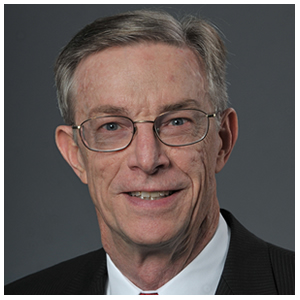
Presenter: Roger LaBoube, Ph.D., P.E.
Wei-Wen Yu Center for Cold-Formed Steel Structures
Roger LaBoube, Ph.D., P.E. is Curator’s Distinguished Teaching Professor Emeritus of Civil, Architectural and Environmental Engineering and Director of the Wei-Wen Yu Center for Cold-Formed Steel Structures at the Missouri University of Science & Technology (formerly University of Missouri-Rolla). Dr. LaBoube holds B.S., M.S., and Ph.D. degrees in Civil Engineering from the University of Missouri-Rolla. Dr. LaBoube has an extensive background in the design and behavior of cold-formed steel structures. His research and design activities have touched on many facets of cold-formed steel construction including cold-formed steel beams, panels, trusses, headers, and wall studs as well as bolt, weld, and screw connections. He is active in several professional organizations and societies, including membership on the American Iron and Steel Institute’s Committee on Specifications for the Design of Cold-Formed Steel Structural Members and chairman of the AISI Committee on Framing Standards. He is a registered Professional Engineer in Missouri.
In order to receive credit for this course, you must complete the quiz at the end and pass with at least 80% for a certificate to be generated automatically
Webinar on Design Considerations for Cold-Formed Steel Light Frame Diaphragms
Continuing Education Credits Available – 1.5 PDH Credits
This webinar will cover the basic design of cold-formed steel light frame diaphragms as envisioned in the provisions articulated in AISI S100-16, North American Specification for the Design of Cold-Formed Steel Structural Members, 2016 Edition; AISI S230-19, North American Standard for Cold-Formed Steel Framing―Prescriptive Method for One- and Two-Family Dwellings, 2019 Edition; AISI S400-15 w/S1-16, North American Standard for Seismic Design of Cold-Formed Steel Structural Systems, 2015 Edition with Supplement 1; and AISI S240-15, North American Standard for Cold-Formed Steel Structural Framing, 2015 Edition. Design practice documents derived from these AISI Standards will also be addressed. At the conclusion of this webinar, design professionals will have a better understanding of current provisions that support engineered design (strength and deflection) of conventional codebased light frame cold-formed steel diaphragms as well as the limitations of these provisions.
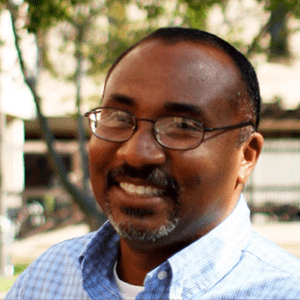
Presenter: Reynald Serrette, Ph.D.,
Santa Clara University
Reynaud Serrette, Ph.D. is a professor in the Department of Civil, Environmental and Sustainable Engineering at Santa Clara University in Santa Clara, California. He has been involved in cold-formed steel research and design since 1987.
In order to receive credit for this course, you must complete the quiz at the end and pass with at least 80% for a certificate to be generated automatically