

Webinar on Composite Steel Floor System – Fastfloor R
$100.00
Continuing Education Credits Available – 1.5 PDH Credits
This webinar investigates the structural performance of a novel, nonproprietary composite steel floor system designed for rapid assembly in residential and similar applications.
The primary version of the system comprises two opposing 3-inch-deep, 18-gauge steel decks forming a closed cell, topped with a cementitious panel and optional non-structural finishes. A series of full-scale tests were conducted—spanning bare to fully finished assemblies—under both vibration and four-point bending to evaluate dynamic and flexural behavior.
Floor vibration testing was performed at each construction stage using multiple accelerometers, and preliminary results indicate clear pathways to achieving successful vibration performance. Results show that the cementitious panel significantly enhances stiffness and strength of the assembly. Observed local buckling in the steel deck prior to failure highlights the importance of composite action, and ongoing efforts aim to refine end details and explore alternative configurations for broader application.
This webinar will discuss these findings and initial design ideas for the development of this new floor system.
Presenter
Benjamin W. Schafer, Ph.D., P.E.
Johns Hopkins University
Benjamin Schafer, Ph.D., P.E., F. SEI is the Hackerman Professor of Civil and Systems Engineering and the Director of the Ralph O’Connor Sustainable Energy Institute at Johns Hopkins University. He is an active volunteer and leader on multiple national committees related to the engineering and design of steel building structures. He has won multiple awards for his research, teaching, and speaking and currently resides in Washington D.C. with his wife and son.
In order to receive credit for this course, you must complete the quiz at the end and pass with at least 80% for a certificate to be generated automatically
Related Products

Webinar on Design Considerations for Cold-Formed Steel Light Frame Diaphragms
Continuing Education Credits Available – 1.5 PDH Credits
This webinar will cover the basic design of cold-formed steel light frame diaphragms as envisioned in the provisions articulated in AISI S100-16, North American Specification for the Design of Cold-Formed Steel Structural Members, 2016 Edition; AISI S230-19, North American Standard for Cold-Formed Steel Framing―Prescriptive Method for One- and Two-Family Dwellings, 2019 Edition; AISI S400-15 w/S1-16, North American Standard for Seismic Design of Cold-Formed Steel Structural Systems, 2015 Edition with Supplement 1; and AISI S240-15, North American Standard for Cold-Formed Steel Structural Framing, 2015 Edition. Design practice documents derived from these AISI Standards will also be addressed. At the conclusion of this webinar, design professionals will have a better understanding of current provisions that support engineered design (strength and deflection) of conventional codebased light frame cold-formed steel diaphragms as well as the limitations of these provisions.
Presenter: Reynald Serrette, Ph.D.,
Santa Clara University
Reynaud Serrette, Ph.D. is a professor in the Department of Civil, Environmental and Sustainable Engineering at Santa Clara University in Santa Clara, California. He has been involved in cold-formed steel research and design since 1987.
In order to receive credit for this course, you must complete the quiz at the end and pass with at least 80% for a certificate to be generated automatically
Webinar on Cold-Formed Steel Classroom: Design Topics Not in a Design Standard
Continuing Education Credits Available – 1.5 PDH Credits
Last year alone the CFSEI Hotline responded to over 4,800 inquires. These inquires cover the gamut of cold-formed steel applications. Because these questions often are beyond the scope of a design standard engineering judgement is needed. Roger will review a few of the Hotline topics with a focus on employing engineering principals to solve everyday design considerations. Topics to be addressed are:
- Should loose straps be a concern?
- Does gypsum between the steel plies impact the screw connection strength?
- For the single-side strap brace, what are the implications for the design of the boundary post?
- How does one design a shear wall for force transfer around openings?
- What wind loading drift limits are appropriate for mid-rise structures?
 Presenter: Roger LaBoube, Ph.D., P.E.
Wei-Wen Yu Center for Cold-Formed Steel Structures
Roger LaBoube, Ph.D., P.E. is Curator’s Distinguished Teaching Professor Emeritus of Civil, Architectural and Environmental Engineering and Director of the Wei-Wen Yu Center for Cold-Formed Steel Structures at the Missouri University of Science & Technology (formerly University of Missouri-Rolla). Dr. LaBoube holds B.S., M.S., and Ph.D. degrees in Civil Engineering from the University of Missouri-Rolla. Dr. LaBoube has an extensive background in the design and behavior of cold-formed steel structures. His research and design activities have touched on many facets of cold-formed steel construction including cold-formed steel beams, panels, trusses, headers, and wall studs as well as bolt, weld, and screw connections. He is active in several professional organizations and societies, including membership on the American Iron and Steel Institute’s Committee on Specifications for the Design of Cold-Formed Steel Structural Members and chairman of the AISI Committee on Framing Standards. He is a registered Professional Engineer in Missouri.
In order to receive credit for this course, you must complete the quiz at the end and pass with at least 80% for a certificate to be generated automatically
Webinar on Mid-Rise Construction using Light Weight Steel Framing
Continuing Education Credits Available – 1.5 PDH Credits
The webinar will cover light gauge steel wall framing and C-joists, composite deck and concrete, precast concrete, steel beams and deck and light gauge steel trusses. It will review wall and floor, fire and sound assemblies, panelization of walls, structural floor systems, lateral stability, roof design, shear wall deflection compared to wood, progressive collapse, and overall approval process. The webinar will also review completed projects.
Presenter: Raymond van Groll, M.Sc.(Eng), P.Eng.,
Atkins + Van Groll Inc.

Raymond van Groll, M.Sc.(Eng), P.Eng., Managing Partner of Atkins + Van Groll Inc. With over 25 years of experience, van Groll specializes in mid-rise structural buildings and light gauge steel construction. In 1990, he founded Van Groll Engineering Inc., a structural professional engineering company specializing in residential and commercial construction and light gauge steel design. In 1997, he co-founded Atkins + Van Groll Inc. Consulting Engineers with Jonathan Atkins.
Raymond van Groll assisted in the development of the Canadian Sheet Steel Building Institute (CSSBI) “Lightweight Steel Framing Design Manual.” Some of his most notable projects include Chelster Hall Estate in Oakville, the Louis Vuitton Flagship Store in Toronto, The Rosseau, J.W. Marriott Resort & Spa, and Corktown Condominiums in Toronto.
In order to receive credit for this course, you must complete the quiz at the end and pass with at least 80% for a certificate to be generated automatically
Webinar on Cold-Formed Steel Curtain Wall Design
Continuing Education Credits Available – 1.5 PDH Credits
Curtain walls with various types of cladding are commonly used for many modern structures and are often framed with cold-formed steel. Curtain walls are typically attached to the main building frame and therefore must be designed to accommodate deflections of the structural frame and also designed to transfer wind and seismic forces to the structure. This webinar will cover many of the topics a designer will need for a complete cold-formed steel curtain wall design. The information presented will be based upon AISI S100, North American Specification for the Design of Cold-Formed Steel Structural Members, AISI S211, North American Standard for Cold-Formed Steel Framing – Wall Stud Design and various CFSEI Technical Notes. Some specific topics covered will include stud design, top track design, design of openings, bridging and various additional miscellaneous topics. Example calculations will also be provided covering studs, top track, connections and openings.
Presenter: Sutton Stephens, P.E., S.E., Ph.D.
Sutton Stephens, P.E., S.E., Ph.D. has experience in the structural engineering field and in education. He has worked for consulting engineering firms in Washington and Montana and taught structural engineering courses at Kansas State University in the Architectural Engineering Department. In addition to the design of cold-formed steel structures, he has authored or co-authored a number of research papers covering various topics in cold-formed steel. He has served in the AISI Committee on Framing Standards (COFS) and chaired the Prescriptive Methods sub-committee. He also served on the CFSEI Executive Committee for two terms.
In order to receive credit for this course, you must complete the quiz at the end and pass with at least 80% for a certificate to be generated automatically
Webinar on Cold-Formed Steel Floor System
Continuing Education Credits Available – 1.5 PDH Credits
This webinar will focus on the ideation, development, analysis and experimental evaluation of an innovative lightweight modular floor system utilizing cold-formed steel. As part of a research project funded by the American Institute of Steel Construction (AISC), researchers at the University of Kansas developed a novel floor system composed primarily of cold-formed steel, intended for modular use in steel-framed buildings. The webinar will highlight the background and initial development of the floor system, including design and construction considerations and corresponding analyses. As rapid fabrication, vibration mitigation and diaphragm behavior were emphasized in the development of the floor system, experimental testing of the floor focused on the cyclic behavior of connectors in the cold-formed steel components, vibration serviceability of the floor, and cyclic diaphragm performance within a steel-framed structure. All aspects of system validation will be presented, including physical and analytical evaluations as well as recommendations for future implementation and other project.
Matthew F. Fadden, Ph.D., P.E., Wiss, Janney, Elstner Associates
 Dr. Fadden joined WJE with 10 years of experience in structural engineering research and consulting. His primary areas of expertise include the design, analysis and evaluation of steel structures (hot-rolled and cold-formed) and reinforced concrete structures. Additionally, Dr. Fadden has expertise in structural evaluation using finite element modeling and structural testing. His experience also includes seismic design, structural vibrations, offshore structures and litigation support.
Prior to joining WJE, Dr. Fadden was a professor in the Department of Civil, Environmental, and Architectural Engineering at the University of Kansas. There, his research areas included modular systems and connections for steel buildings, bolted and welded connections, ancillary sign structures, structural vibrations, and additive manufacturing for civil infrastructure. Dr. Fadden has authored many technical publications in referenced journals and provided numerous conference presentations.
Dr. Fadden is a member of the American Institute of Steel Construction (AISC), the American Society of Civil Engineers (ASCE), and the Cold-Formed Steel Engineers Institute (CFSEI). He is a registered Professional Engineer in Alabama, Florida, Kansas and Louisiana He earned a B.S. degree in Civil Engineering from the University of Illinois at Urbana-Champaign and M.S. and Ph.D. degrees in Civil Engineering from the University of Michigan.
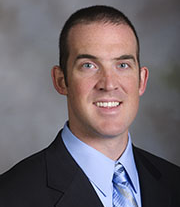 William N. Collins, Ph.D., P.E., University of Kansas
Dr. Collins is the Chair’s Council Associate Professor of Civil, Environmental and Architectural Engineering at the University of Kansas.
Dr. Collins’ expertise is in structural engineering, with a particular focus on fracture and fatigue behavior and metallic infrastructure. He has been associated with numerous projects related to structural behavior, fabrication and inspection. He is active with numerous professional organizations, including TRB, ASTM International and the AASHTO/NSBA Collaboration. Dr. Collins is also engaged in a variety of educational initiatives at the University of Kansas, including the development and implementation of peer mentoring in structural engineering curricula, an effort that has spread to other groups and departments within the university. He was awarded the AISC Milek Fellowship in 2021.
Previously, he was a research engineer at Purdue University and a research/teaching assistant at Virginia Polytechnic Institute and State University (Virginia Tech). He was also a timberwright at Blue Ridge Timberwrights in Christiansburg, Virginia and a construction superintendent at Prospect Homes of Richmond.
Dr. Collins is a registered Professional Engineer in Kansas. He holds B.S., M.S., and Ph.D. degrees in Civil Engineering, Structural Engineering and Materials from Virginia Tech.
In order to receive credit for this course, you must complete the quiz at the end and pass with at least 80% for a certificate to be generated automatically
Webinar on Demystifying Cold-Formed Steel Torsion Analysis for Design
Continuing Education Credits Available – 1.5 PDH Credits
Cold-formed steel structural members are commonly subjected to torsion. The torsional behavior of open cross-sections can be complex, involving both warping torsion and St. Venant torsion. Most structural engineering curriculums do not teach this combined torsion response, leaving many engineers with limited ability to properly design for torsion. To complicate matters, most structural analysis software does not fully capture the torsional behavior for cold-formed steel members.
This webinar will review some torsion fundamentals and explain torsion distribution using analogies to flexural behavior familiar to structural engineers. The similarity to flexure will be demonstrated using the CFS® software. The AISI design provisions for combined bending and torsion will be reviewed, and the application of these provisions will be evaluated with several design examples.
Presenter: Bob Glauz, P.E., MSCE
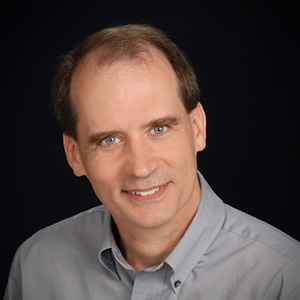
Bob Glauz is the author of the CFS® software used internationally for cold-formed steel design. He is a member of the American Iron and Steel Institute (AISI) Committee on Specifications and chairs the AISI Committee on Member Design. He is also a member of the ASCE/SEI Standards Committee on Stainless Steel Cold-Formed Sections, the Structural Stability Research Council (SSRC) and the SSRC Task Group on Stability of Steel Members. Bob has authored several technical articles on lateral-torsional, flexural-torsional, and distortional buckling of cold-formed steel members.
In order to receive credit for this course, you must complete the quiz at the end and pass with at least 80% for a certificate to be generated automatically
Webinar on Introducing AISI S250: Your Starting Place for Determining Thermal Transmittance through Cold-Formed Steel Framing
Continuing Education Credits Available – 1.5 PDH Credits
The webinar introducing AISI S250, North American Standard for Thermal Transmittance of Building Envelopes with Cold-Formed Steel Framing, will walk attendees through the history, development and contents of the AISI S250 standard. Participants will obtain a relative understanding of how to apply the various provisions in order to evaluate the thermal capabilities of envelope assemblies (e.g., walls, ceilings/roofs) containing cold-formed steel framing for use in professional practice. Jonathan Humble led the work group responsible for the development and publication of the AISI S250 standard.
Presenter: Jonathan Humble, FAIA, NCARB, LEED BD+C
American Iron and Steel Institute
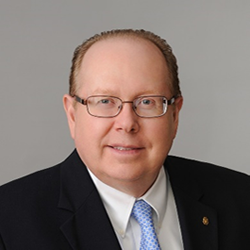 Jonathan Humble is a Regional Director of Construction Codes and Standards for the American Iron and Steel Institute (AISI). He holds Bachelor’s and Master’s degrees in Architecture from the University of Wisconsin-Milwaukee, is licensed as an architect in Connecticut and Massachusetts, is NCARB-certified, and holds a LEED AP-BD+C credential. He has received architectural awards for his designs while in the practice of architecture.
Jonathan was inducted into the American Institute of Architects (AIA) College of Fellows for his outstanding contributions to the AIA and its membership. He is a recipient of the International Code Council’s Honorary Membership, ASHRAE International’s Distinguished Service Award, National Fire Protection Association’s Committee Service Award, and the Cool Roof Ratings Council’s Marty Hastings Award, all in recognition of his exceptional service and contributions to these codes and standards organizations.
Jonathan’s activities within AISI include research and development of new technologies for AISI standards and guides, participation in national model codes and standards development, and educational services to steel industry members, design professionals, code officials, general contractors and building owners.
In order to receive credit for this course, you must complete the quiz at the end and pass with at least 80% for a certificate to be generated automatically
Webinar on Cold-Formed Steel Framing Design with Data-Driven Models
Continuing Education Credits Available – 1.5 PDH Credits
A historical challenge for the cold-formed steel industry has been the generation of many disparate physical test data sets without much dedicated effort on collecting and curating that data. A non-profit data-driven Initiative was recently launched to address this knowledge gap, and the Initiative’s mission is to make high quality physical test data accessible to anyone. This webinar will discuss a plan for using emerging data-driven tools to design cold-formed steel framing. The webinar will present a convincing case for how data-driven models can reduce the hoops an engineer has to jump through to design cold-formed steel framing. Cris will use examples to highlight the first open databases and supporting data tools from the Initiative that are now becoming available.

Cristopher D. Moen, Ph.D., P.E., F.SEI
RunToSolve LLC
Cris Moen is CEO and President of RunToSolve LLC, a software R&D company founded in 2019 that specializing in structural system analysis and design automation.
Cris started his career as a bridge engineer at J. Muller International (1997-2002) and Parsons Corporation (2002-2004). He completed his Ph.D. at Johns Hopkins University (2004-2008) focusing on thin-walled structures and cold-formed steel, working up to Associate Professor at Virginia Tech (2008-2016), and since 2017 has served as a part-time faculty member at Johns Hopkins University. From 2013 to 2018 Cris was CEO of NBM Technologies, Inc., an academically-rooted engineering consulting company that completed over 100 projects across building construction, solar, and aerospace industry sectors.
In order to receive credit for this course, you must complete the quiz at the end and pass with at least 80% for a certificate to be generated automatically