

Webinar on Vibration of Floors with Cold-Formed Steel Framing
$100.00
Continuing Education Credits Available – 1.5 PDH Credits
Cold-formed steel (CFS) joists and trusses have high strength-to-weight ratios and good overall economy, so they are popular choices for floor framing members. As is the case with most types of floor systems, CFS floors are potentially susceptible to annoying vibrations due to walking and other human activities. This presentation will raise awareness of the importance of vibration serviceability by describing two forensics projects with lively CFS floors. Evaluation methods will be recommended for low-frequency floors and high-frequency floors.
Presenter
Brad Davis, Ph.D., S.E., P.E.
University of Kentucky
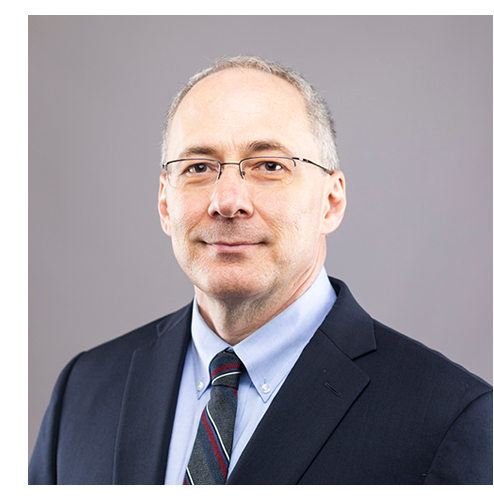
Brad Davis is an Associate Professor of Civil Engineering at the University of Kentucky where he is responsible for all steel design coursework and has received excellence in teaching awards. As the owner of Davis Structural Engineering, LLC, he provides consulting services for structural vibration, steel connections, forensics, and advanced steel design applications. Dr. Davis earned his Ph.D. from Virginia Tech and has an S.E. license and P.E. licenses in 14 states. Dr. Davis has been a member of the AISC Committee on Manuals for over 20 years and is a consultant for the Steel Solutions Center. He has published approximately two dozen papers on vibration, and has presented continuing education courses for vibrations and steel connections to various industry and professional groups.
In order to receive credit for this course, you must complete the quiz at the end and pass with at least 80% for a certificate to be generated automatically
Related Products

Webinar on Updates to the AISI North American Specification and Standards
Continuing Education Credits Available – 1.5 PDH Credits
The American Iron and Steel Institute (AISI) has been involved in the support of research and the development and maintenance of cold-formed steel codes, standards and specifications for 90 years. AISI sought American National Standards Institute (ANSI) accreditation and was approved as a developer of American National Standards in 1999.
AISI S100, North American Specification for the Design of Cold-Formed Steel Structural Members and the suite of AISI framing standards are the referenced documents for cold-formed steel design in the International Building Code. Every few years, AISI updates the Specification and standards to add new provisions based on the latest information from research and industry. These updates can deliver improved methods for analyzing members, provide new considerations when designing members and connections, and directly impact the design of floor, wall and roof systems. This webinar will review all of the relevant changes to these AISI documents and how they are intended for implementation into the applicable building codes.
Presenter: Jon-Paul Cardin, P.E.
American Iron and Steel Institute
 Jon-Paul currently serves as a codes and standards engineer for the American Iron and Steel Institute (AISI). In this position, he represents the interests of the steel construction industry in the national codes and standards arenas. Specifically, Jon-Paul is active in the International Code Council (IBC, IRC), ASCE 7 and NFPA 5000, as well as the AISI Committee on Specifications and AISI Committee on Framing Standards. Prior to joining AISI, Jon-Paul served as the engineering manager for a steel framing manufacturer. He holds Bachelor of Science degrees in both Civil Engineering (Structural) and Mathematics from the University of Idaho.
In order to receive credit for this course, you must complete the quiz at the end and pass with at least 80% for a certificate to be generated automatically
Price: $100
Webinar on Coordinating Cold-Formed Steel Framing with Metal Buildings
Continuing Education Credits Available – 1.5 PDH Credits
This webinar will address the following topics:
- Provide a brief introduction to metal buildings and their growing use in more diverse markets,
- Identify design and detailing issues when using cold-formed steel framing in metal buildings,
- Use actual project examples to demonstrate detailing and design concerns and solutions,and
- Provide answers to questions from participants.
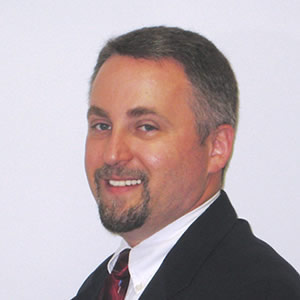
Jeffrey Klaiman, P.E., ADTEK Engineers, Inc.
Jeff has over 20 years of experience in the construction industry. His responsibilities include building maintenance and engineering; on-site engineering for a concrete contractor; Manager of Technical Services and Versa-Truss Product Manager for Dale/Incor (national manufacturer of cold-formed steel framing products and systems), participation on the American Iron and Steel Institute’s Committee on Specifications for the Design of CFS Structural Members and Committee on Framing Standards; a member of CFSEI for more than 10 years; ASTM International and the SFA. Mr. Klaiman serves as chairman of the Standard Practices Subcommittee of the AISI Committee on Framing Standards and is also the president of MASFA. He is a past president of CFSEI. In his position at ADTEK Engineers, Inc. as Principal in Charge of Specialty Engineering, Mr. Klaiman oversees the design and coordination of all cold-formed steel design documents. He also manages in-house staff in three offices for CFS framing design, develops project schedules, and coordinates quality control reviews with project managers on his team. Mr. Klaiman holds a bachelor’s degree in Civil Engineering from the University of Michigan, and an MBA from Eastern Michigan University.
In order to receive credit for this course, you must complete the quiz at the end and pass with at least 80% for a certificate to be generated automatically
Webinar on Practical Allyship – 5 Actions Anyone Can Do to Promote Inclusion at Work
Continuing Education Credits Available – 1.5 PDH Credits
Creating an inclusive work environment is not just the “right thing to do.” Inclusive behaviors are tied to higher levels of individual performance and firm profits; yet creating and working in an inclusive work environment often feels elusive, as evidenced by the fact that almost two-thirds of workers are disengaged at work.
In this interactive session, you will learn about the business case for inclusive work cultures and five simple actions anyone can take to create a more inclusive work environment for those they work with, regardless of current role or firm size. Applicable to everyone from new graduates to CEOs, these strategies have been shown to create a more inclusive work environment while requiring little time or budget to implement. When implemented consistently, these strategies create better work cultures for everyone and improve the retention of coworkers in traditionally marginalized gender, racial, and ethnic groups. You will leave this session empowered with specific actions you can immediately apply to engineer inclusion in your everyday interactions.
Presenter: Stephanie Slocum, P.E., Engineers Rising LLC
 Stephanie Slocum, P.E. is the founder of Engineers Rising LLC and author of “She Engineers: Outsmart Bias, Unlock Your Potential, and Live the Engineering Career of your Dreams.” Stephanie shines light on the barriers to the retention of engineers and provides practical training, inspiration, and mentorship through her online platform and programs. She is a champion of inclusive work cultures.
Stephanie is the current chair of the Structural Engineering Institute’s (SEI) Business Practices committee. She is currently serving as an elected member of SEI’s Board of Governors and is a member of the American Society of Civil Engineers (ASCE) Task Committee on the Code of Ethics. She is a winner of the 2020 Connected World’s Women in Technology Award for her work empowering women in engineering. Prior to founding Engineers Rising, she worked in structural engineering building consulting for 15 years. She holds bachelor’s and master’s degrees in architectural engineering.
In order to receive credit for this course, you must complete the quiz at the end and pass with at least 80% for a certificate to be generated automatically
Webinar on Cold-Formed Steel Framing Design with Data-Driven Models
Continuing Education Credits Available – 1.5 PDH Credits
A historical challenge for the cold-formed steel industry has been the generation of many disparate physical test data sets without much dedicated effort on collecting and curating that data. A non-profit data-driven Initiative was recently launched to address this knowledge gap, and the Initiative’s mission is to make high quality physical test data accessible to anyone. This webinar will discuss a plan for using emerging data-driven tools to design cold-formed steel framing. The webinar will present a convincing case for how data-driven models can reduce the hoops an engineer has to jump through to design cold-formed steel framing. Cris will use examples to highlight the first open databases and supporting data tools from the Initiative that are now becoming available.
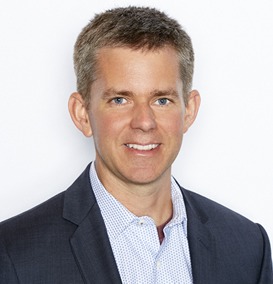
Cristopher D. Moen, Ph.D., P.E., F.SEI
RunToSolve LLC
Cris Moen is CEO and President of RunToSolve LLC, a software R&D company founded in 2019 that specializing in structural system analysis and design automation.
Cris started his career as a bridge engineer at J. Muller International (1997-2002) and Parsons Corporation (2002-2004). He completed his Ph.D. at Johns Hopkins University (2004-2008) focusing on thin-walled structures and cold-formed steel, working up to Associate Professor at Virginia Tech (2008-2016), and since 2017 has served as a part-time faculty member at Johns Hopkins University. From 2013 to 2018 Cris was CEO of NBM Technologies, Inc., an academically-rooted engineering consulting company that completed over 100 projects across building construction, solar, and aerospace industry sectors.
In order to receive credit for this course, you must complete the quiz at the end and pass with at least 80% for a certificate to be generated automatically
Webinar on Vibration Serviceability of Floors with Cold-Formed Steel Framing
Continuing Education Credits Available – 1.5 PDH Credits
Cold-formed steel (CFS) joists and trusses have high strength-to-weight ratios and good overall economy, so they are popular choices for floor framing members. As is the case with most types of floor systems, CFS floors are potentially susceptible to vibrations due to walking and other human activities. This webinar will raise awareness of the importance of vibration serviceability by describing two forensics projects with lively CFS floors. The literature contains several floor vibration evaluation methods that might be applicable to CFS floor. However, unlike other materials, there is not a widely accepted and practical vibration evaluation method for CFS floors. Potential evaluation methods will be discussed.
Presenter: Brad Davis, Ph.D., S.E., P.E.
University of Kentucky
 Brad Davis is an associate professor of civil engineering at the University of Kentucky where he is responsible for all steel design coursework and has received awards recognizing excellence in teaching. As the owner of Davis Structural Engineering, LLC, he provides consulting services for structural vibration, forensics and advanced steel design applications. He is a member of the AISC Committee on Manuals, and is a co-author of AISC Design Guide 11, Vibrations of Steel-Framed Structural Systems Due to Human Activity. Brad has published approximately two dozen journal and conference papers on vibration. He earned his Ph.D. from Virginia Tech and has eight years of experience in building design. He has S.E. and P.E. licenses in 14 states.
In order to receive credit for this course, you must complete the quiz at the end and pass with at least 80% for a certificate to be generated automatically
Webinar on Cold-Formed Steel Classroom: Impact of the 2018 IBC
Continuing Education Credits Available – 1.5 PDH Credits
The American Iron and Steel Institute’s Committee on Framing Standards has developed 2015 editions of the suite of cold-formed steel framing design standards (S220-15, S240-15, S400-15) and the Committee on Specifications has developed S310-15 for diaphragm design, as well as a 2016 edition of the North American Specification (S100-16). This presentation will discuss the scope and some of the changes to these design standards. Specific reference will be provided to clarify adoption of the standards in the 2018 International Building Code.
The presentation will highlight available design aids provided by AISI such as AISI D110-16, Cold-Formed Steel Framing Design Guide, which has been updated to reflect the design requirements of AISI S100-2012 and AISI S240-2015. Another excellent source for design examples is the Cold-Formed Steel Engineers Institute Tech Notes which will also be addressed by the presentation. Also, an overview of the soon to be published AISI D113 Cold-Formed Shear Wall Design Guide will be provided.
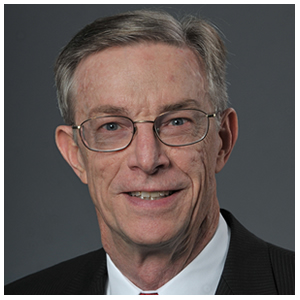 Presenter: Roger LaBoube, Ph.D., P.E.
Wei-Wen Yu Center for Cold-Formed Steel Structures
Roger LaBoube, Ph.D., P.E. is Curator’s Distinguished Teaching Professor Emeritus of Civil, Architectural and Environmental Engineering and Director of the Wei-Wen Yu Center for Cold-Formed Steel Structures at the Missouri University of Science & Technology (formerly University of Missouri-Rolla). Dr. LaBoube holds B.S., M.S., and Ph.D. degrees in Civil Engineering from the University of Missouri-Rolla. Dr. LaBoube has an extensive background in the design and behavior of cold-formed steel structures. His research and design activities have touched on many facets of cold-formed steel construction including cold-formed steel beams, panels, trusses, headers, and wall studs as well as bolt, weld, and screw connections. He is active in several professional organizations and societies, including membership on the American Iron and Steel Institute’s Committee on Specifications for the Design of Cold-Formed Steel Structural Members and chairman of the AISI Committee on Framing Standards. He is a registered Professional Engineer in Missouri.
In order to receive credit for this course, you must complete the quiz at the end and pass with at least 80% for a certificate to be generated automatically
Back-to-Basics: Structural vs Nonstructural Members Webinar
Continuing Education Credits Available – 1.5 PDH Credits
The North American Standard for Cold-Formed Steel Framing – Nonstructural Members, AISI S220, has been adopted into IBC 2015. AISI S220 was created to help delineate and eliminate the confusion between the engineering principles and requirements for cold-formed steel structural members and nonstructural members. The webinar will address the basic behavior of composite vs non-composite wall assemblies, as well as design requirements that differ between the structural and nonstructural member.
Presenter: Roger LaBoube, Ph.D., P.E.
Wei-Wen Yu Center for Cold-Formed Steel Structures
Roger LaBoube, Ph.D., P.E. is Curator’s Distinguished Teaching Professor Emeritus of Civil, Architectural and Environmental Engineering and Director of the Wei-Wen Yu Center for Cold-Formed Steel Structures at the Missouri University of Science & Technology (formerly University of Missouri-Rolla). Dr. LaBoube holds B.S., M.S., and Ph.D. degrees in Civil Engineering from the University of Missouri-Rolla. Dr. LaBoube has an extensive background in the design and behavior of cold-formed steel structures. His research and design activities have touched on many facets of cold-formed steel construction including cold-formed steel beams, panels, trusses, headers, and wall studs as well as bolt, weld, and screw connections. He is active in several professional organizations and societies, including membership on the American Iron and Steel Institute’s Committee on Specifications for the Design of Cold-Formed Steel Structural Members and chairman of the AISI Committee on Framing Standards. He is a registered Professional Engineer in Missouri.
In order to receive credit for this course, you must complete the quiz at the end and pass with at least 80% for a certificate to be generated automatically
Webinar on The New AISI Shear Wall Design Guide – AISI-D113-19
Continuing Education Credits Available – 1.5 PDH Credits
The webinar will provide an overview of shear wall design principles as presented in AISI D113-19 including: Load Path; Wind and Seismic Considerations; Type I and II Shear Wall concepts; Shear Wall Deflection. Design examples will also be presented.
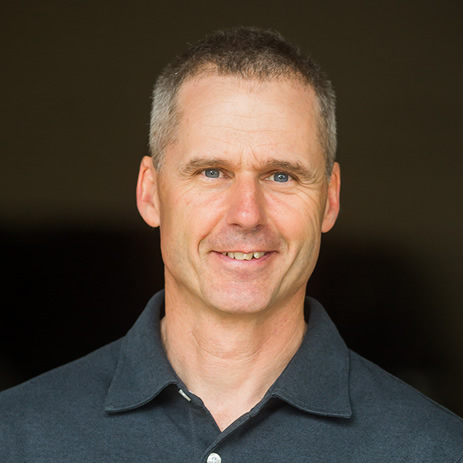
Presenter: Robert L. Madsen, P.E., Devco Engineering, Inc.
Robert Madsen is a Principal with Devco Engineering, Inc. in Enterprise, Oregon where he specializes in the design of cold-formed steel framing. He serves on the American Iron and Steel Institute (AISI) Committee on Specifications (COS) and Committee on Framing Standards (COFS), where he is chairman of the Lateral Subcommittee. He is also chairman of the Technical Review Committee of the Cold-Formed Steel Engineers Institute (CFSEI).
In order to receive credit for this course, you must complete the quiz at the end and pass with at least 80% for a certificate to be generated automatically